8 minute read
Work Lunch Meal Prep That Still Tastes Good by Friday
Plan work lunches that keep quality through Friday by sequencing ingredients, storing components separately, using leftovers, and scheduling a reset.

Five identical containers are easy to photograph but not always pleasant to eat. Work lunch planning improves when ingredients are sequenced by quality, wet and crisp components stay separate, dinner leftovers have named days, and later-week meals rely on freezer or pantry support. The objective is reliable lunches, not maximum advance assembly.
The plan will produce several lunch formats from a small component set while protecting texture, food safety, portability, and the reality of changing workdays. This guide turns that outcome into a repeatable paper workflow rather than a perfect menu that only works once. Start with the information you already have, make the few decisions that reduce the most friction, and leave visible room for the week to change.
Match lunch format to the work setting
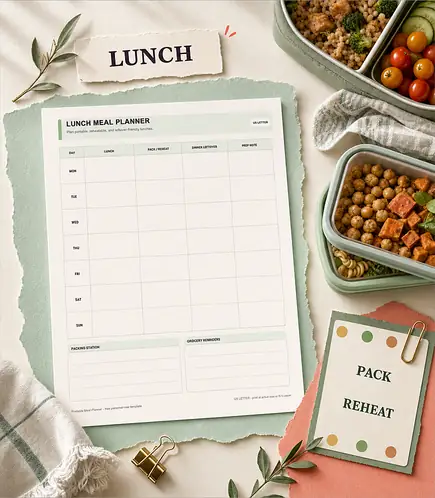
A lunch that requires a refrigerator, microwave, bowl, and long break will fail in a setting that provides none of those things. Portability begins with the calendar. Label each day cold, reheatable, shelf-stable component, or home lunch based on available facilities and time. Check workplace policies where relevant.
For example, a field day may need a sturdy sandwich and safe cold storage, while a remote day can use a reheated leftover. On your planner, write the format beside each day before selecting the meal. Review that note at the end of the week so the next plan reflects what actually happened rather than what you hoped would happen.
- Confirm refrigerator and microwave access.
- Consider transport time and bag weight.
- Pack utensils and containers the setting requires.
Prepare components at different levels
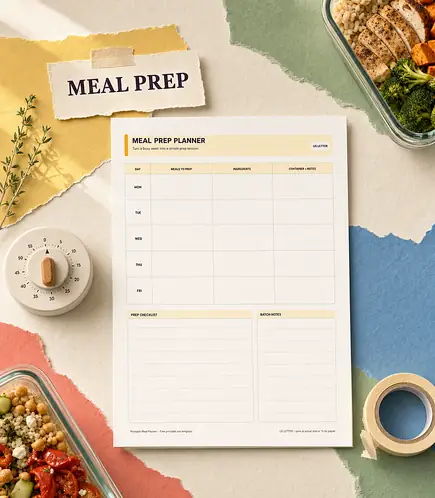
Fully assembling every lunch can damage texture and shorten quality. Components often hold better when prepared but stored separately. Cook grains or proteins, wash sturdy produce, mix sauces, and portion stable snacks, but delay assembly of delicate greens, crisp toppings, or bread where useful.
For example, store dressing away from salad, keep wrap filling separate from tortillas, and add crunchy toppings before eating. On your planner, mark assemble morning or assemble at work beside meals with separate components. Review that note at the end of the week so the next plan reflects what actually happened rather than what you hoped would happen.
- Use leakproof containers.
- Dry washed greens thoroughly.
- Follow safe cooling and storage guidance.
Sequence delicate lunches early
Food quality changes across the week. Scheduling every fresh component for Friday asks storage to do more than planning. Use delicate greens, cut fruit, and fresh bread earlier, then shift toward roasted vegetables, durable salads, freezer portions, or pantry-supported lunches later.
For example, Monday may use a leafy salad, Wednesday a grain bowl, and Friday a frozen soup portion with bread. On your planner, underline lunches with short-quality ingredients and place them first. Review that note at the end of the week so the next plan reflects what actually happened rather than what you hoped would happen.
- Consider the actual ingredient, not a universal rule.
- Keep later lunches independent of fragile produce.
- Freeze suitable portions before the week begins.
Connect dinner leftovers to named lunches
Dinner leftovers reduce lunch prep only when portion and timing are planned. Otherwise the food may be eaten by someone else or remain unclaimed. Choose two dinners that produce suitable lunch portions and reserve them during cleanup. Confirm the workplace format and safe storage window.
For example, Tuesday roasted vegetables and grains can become Wednesday lunch, while soup can be portioned for Thursday. On your planner, write the lunch destination beside dinner and label the reserved container. Review that note at the end of the week so the next plan reflects what actually happened rather than what you hoped would happen.
- Reserve portions before serving seconds.
- Keep sauces or garnishes separate when useful.
- Do not depend on leftovers from an uncertain dinner.
Create a Wednesday quality reset
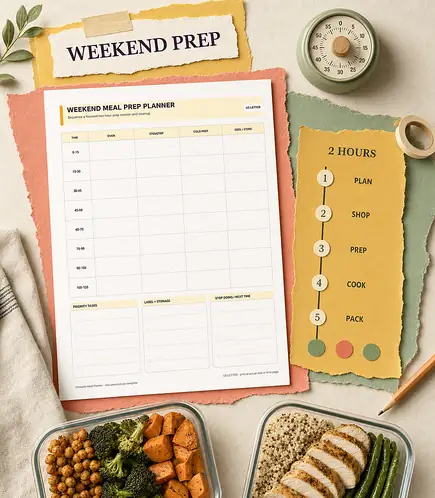
A short midweek check protects Thursday and Friday better than overpreparing on Sunday. It also catches changed office plans. Review remaining lunches, move a freezer portion to thaw safely, wash or portion one fresh component, and freeze food that is no longer scheduled.
For example, a cancelled office day may move a prepared lunch to dinner and free a later slot for soup from the freezer. On your planner, write three reset tasks in the planner and complete them together. Review that note at the end of the week so the next plan reflects what actually happened rather than what you hoped would happen.
- Check calendar changes.
- Inspect prepared food appropriately.
- Restock portable snacks if needed.
Keep one credible desk or freezer backup
Meetings, forgotten containers, and changed commutes still occur. A backup protects both budget and concentration without replacing the normal plan. Store an acceptable shelf-stable or workplace-freezer meal where permitted and replace it after use. Include everything needed to make it complete.
For example, a soup, grain cup, beans, crackers, nuts, or another suitable combination can cover an unplanned day. On your planner, list the backup and its location in the lunch planner notes. Review that note at the end of the week so the next plan reflects what actually happened rather than what you hoped would happen.
- Follow workplace storage rules.
- Check dates periodically.
- Choose a backup you would willingly eat.
Make the plan work for you
Good work lunches are staged, not necessarily finished. Match the setting, separate vulnerable components, sequence quality across the week, and use a Wednesday reset to keep Friday from tasting like an afterthought. Begin with this one action: mark office, remote, travel, and lunch-meeting days, then identify which lunches need to be portable, reheatable, or edible without equipment Keep the completed sheet where you will see it, make one adjustment after the week is over, and reuse the parts that genuinely saved time, money, or attention.