9 minute read
How to Start Meal Planning for Beginners
Learn how to start meal planning with a simple weekly routine, realistic meal ideas, a grocery-list system, and a free printable planner.

Meal planning is simply deciding what you will eat before the busiest part of the week begins. It does not require a color-coded spreadsheet, a freezer full of identical containers, or a month of recipes chosen in advance. A useful plan is a short decision-making session that gives your future self fewer questions to answer at five o'clock.
The easiest way to begin is with one week, a small number of familiar meals, and a planner that stays visible. This guide walks through a repeatable routine you can finish in about twenty minutes. You will choose realistic dinners, reuse ingredients, create a grocery list, and leave enough flexibility for leftovers or changing plans.
Start with the week you actually have
Before choosing recipes, look at your calendar. Mark late workdays, school activities, appointments, travel, and evenings when someone else will cook. A meal plan that ignores the calendar creates unnecessary pressure. A meal plan built around the calendar tells you where a fifteen-minute dinner, leftovers, or a slow-cooker meal will be most useful.
Count the meals that truly need a plan. If Friday is always takeout and Sunday dinner is at a relative's house, do not invent two extra cooking projects. Many beginners only need four planned dinners, one leftovers night, and two flexible nights. Starting smaller makes the habit easier to repeat.
- Mark the busiest two evenings first.
- Write down meals that are already decided.
- Reserve one leftovers or clean-out-the-fridge night.
- Leave one flexible slot for changes.
Choose familiar meals before new recipes
A weekly plan should contain mostly meals you already know how to make. Familiar meals reduce preparation time, make grocery quantities easier to estimate, and lower the chance that ingredients go unused. A helpful beginner ratio is three reliable favorites, one meal assembled from convenience ingredients, and one new recipe if you have the energy for it.
Keep a short list of dependable dinners near your planner. Pasta with vegetables, tacos, soup and bread, sheet-pan chicken, grain bowls, baked potatoes, and breakfast-for-dinner can all be adapted to different seasons and dietary needs. When planning feels difficult, choose from this list instead of starting with an empty search box.
Plan around ingredients, not isolated recipes
The fastest way to waste food is to select seven unrelated recipes with seven unrelated ingredient lists. Instead, choose two or three anchor ingredients that can appear in more than one meal. Roasted vegetables can become a side dish, a grain-bowl topping, and a filling for wraps. Cooked chicken can be served with rice one night and added to soup or salad later.
Ingredient overlap does not mean eating the same dinner repeatedly. It means preparing flexible components once and changing the final combination. Think in terms of a protein, a vegetable, a starch, and a sauce. This also makes substitutions easier when a grocery item is unavailable or more expensive than expected.
Use a weekly meal planner
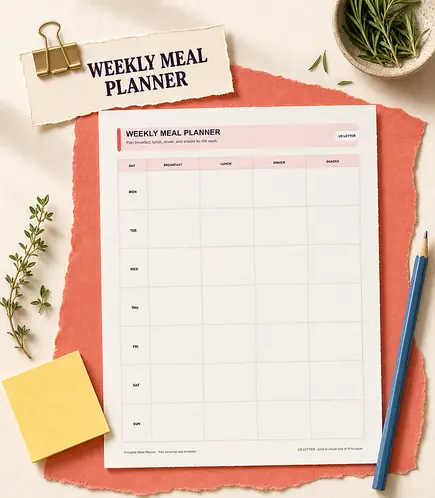
Write the plan somewhere the household can see it. A printable weekly meal planner works well because it is quick to scan, easy to revise in pencil, and does not disappear behind phone notifications. Place it on the refrigerator, inside a cabinet door, or next to the family calendar.
Start with dinner if planning every meal feels overwhelming. Add breakfasts and lunches only when they help you shop or prepare more efficiently. The goal is not to fill every box. The goal is to record enough decisions that the week feels easier.
- Write specific meals rather than vague labels such as healthy dinner.
- Note which nights use leftovers.
- Add a reminder when food needs to be thawed.
- Circle the meal that requires the most preparation.
Turn the plan into one organized grocery list
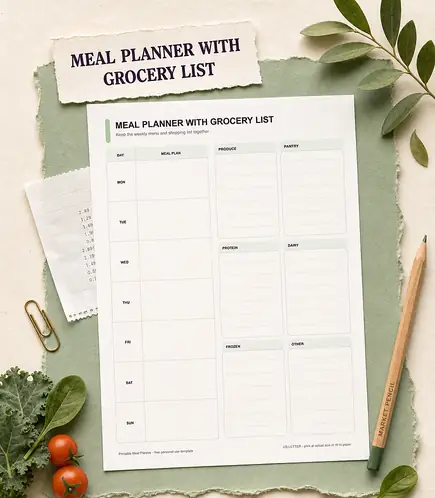
Once the meals are written down, check the refrigerator, freezer, and pantry before adding anything to the list. This two-minute inventory prevents duplicate purchases and may reveal an ingredient that should be used first. Then list the missing items by store section: produce, protein, dairy, pantry, frozen foods, and household items.
Include quantities whenever they matter. Writing two cans of beans or one kilogram of potatoes is more useful than writing beans or potatoes. If an ingredient appears in several meals, total the quantity before shopping. A meal planner with a grocery-list column keeps the menu and shopping decisions in one place.
Prepare only the tasks that save real time
Meal prep does not have to mean cooking every meal on Sunday. Choose the few tasks that remove the most friction later: washing produce, cooking a grain, mixing a sauce, portioning snacks, or chopping the vegetables needed for the first two dinners. Stop when the remaining tasks are easy enough to complete on the day.
Store prepared ingredients according to when they will be used. Put early-week items at eye level and freeze food intended for later. Add a small prep note to the planner so that prepared ingredients are not forgotten. Ten focused minutes can be more valuable than an ambitious afternoon that leaves you too tired to continue the habit.
Review the plan instead of judging it
At the end of the week, notice what worked. Which meal was easiest on a busy night? Which ingredient was left over? Did you plan too many cooking days, or did you need one more lunch option? These observations help the next plan become more accurate.
Do not treat a changed plan as a failed plan. Moving a meal, using leftovers earlier, or choosing takeout can be the sensible response to a real week. Keep the meals that worked on a favorites list and adjust the number of planned meals next time. Consistency comes from making the process forgiving enough to repeat.
Make the plan work for you
For your first week, choose four dinners, schedule one leftovers night, and build one grocery list from the meals you selected. Download the free weekly meal planner, keep it visible, and review it before making next week's plan. A simple plan used consistently will save more time than a perfect system used once.