8 minute read
Meal Planning for Shift Workers and Rotating Schedules
Plan food around rotating shifts with wake-based meals, packed options, break windows, post-shift simplicity, hydration, and schedule resets.

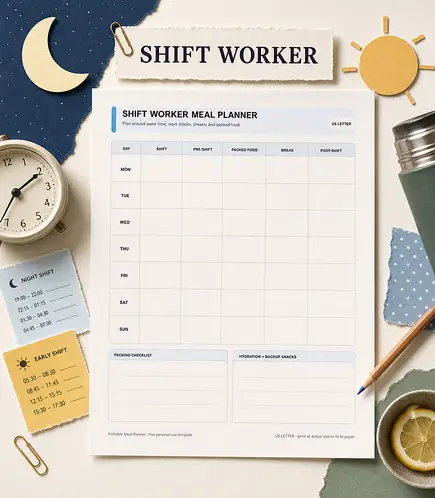
A standard breakfast-lunch-dinner grid can be confusing when work begins at night, ends at dawn, or changes every few days. Shift planning works better when meals are organized around wake time, work blocks, break access, transport, and post-shift capacity. The planner is a logistics tool and should not replace individualized health or nutrition advice.
The plan will identify food opportunities by function, show what must be packed, and preserve simple options for the moments when fatigue makes cooking unrealistic. This guide turns that outcome into a repeatable paper workflow rather than a perfect menu that only works once. Start with the information you already have, make the few decisions that reduce the most friction, and leave visible room for the week to change.
Use wake time as the planning anchor
Meal labels tied to clock time may not match a worker's actual day. A first meal after waking can serve the role of breakfast even when it occurs in the afternoon. Label food opportunities first meal, pre-shift, packed meal, break snack, and post-shift rather than forcing conventional names. Follow personal guidance where needed.
For example, a worker waking at 3 p.m. may have a first meal at 4 p.m. and pack the largest work meal for midnight. On your planner, write the function and approximate time beside each planned item. Review that note at the end of the week so the next plan reflects what actually happened rather than what you hoped would happen.
- Start with actual sleep and work blocks.
- Do not copy the schedule from a different shift.
- Leave room for variable break timing.
Match packed food to break conditions
A meal requiring long reheating or several containers may not fit a short or interrupted break. Facility access and time shape what is practical. Confirm refrigeration, reheating, eating location, and break length. Pack food that can be used safely within those constraints, plus one stable backup.
For example, a grain bowl may suit a reliable meal break, while a portable snack may be necessary for an unpredictable shorter break. On your planner, note cold, reheat, or no equipment beside the packed food. Review that note at the end of the week so the next plan reflects what actually happened rather than what you hoped would happen.
- Follow workplace storage rules.
- Use containers that open and close quickly.
- Pack utensils and napkins.
Prepare components for several shift types
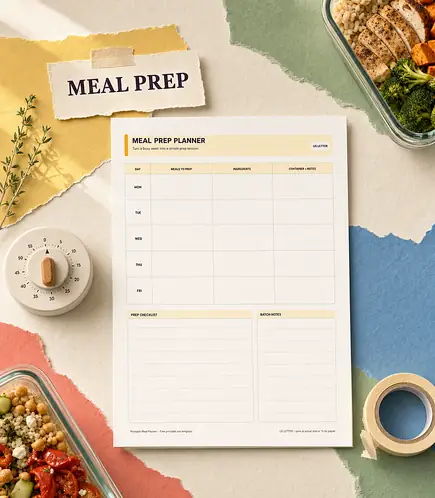
Rotating schedules make rigid container sets less useful. Flexible components can become a full meal, smaller meal, or snack depending on the day. Prepare a base, protein or satisfying component, vegetables, and sauce separately. Assemble portions according to shift length and break access.
For example, rice, roasted vegetables, chicken or beans, and sauce can become a bowl, wrap filling, or smaller snack plate. On your planner, list components and intended combinations rather than assembling every portion at once. Review that note at the end of the week so the next plan reflects what actually happened rather than what you hoped would happen.
- Cool and store components safely.
- Keep delicate textures separate.
- Vary flavor across repeated components.
Keep post-shift food deliberately simple
Fatigue after work can make a planned cooking project unrealistic. A complicated post-shift meal often becomes an unplanned purchase or is skipped. Choose an easy-to-reheat, assemble, or eat option and prepare it before the shift. Consider appetite and personal guidance rather than assuming one ideal meal size.
For example, soup, a prepared bowl, toast with suitable toppings, or a freezer portion may be more realistic than starting a recipe. On your planner, write the post-shift option and its storage location. Review that note at the end of the week so the next plan reflects what actually happened rather than what you hoped would happen.
- Make instructions minimal.
- Avoid depending on shopping after work.
- Keep a second backup for exceptionally difficult shifts.
Plan hydration and backups visibly
Changing work environments and protective equipment can affect access to drinks and food. These practical constraints should be confirmed rather than assumed. Follow workplace rules and personal health guidance, prepare suitable containers, and list stable backup snacks that can remain available where permitted.
For example, a labeled water bottle and an approved shelf-stable snack can reduce dependence on vending options. On your planner, add refill, bottle, and backup checks to the packing list. Review that note at the end of the week so the next plan reflects what actually happened rather than what you hoped would happen.
- Confirm what is allowed in the work area.
- Clean reusable containers regularly.
- Replace backups after use.
Reset the plan whenever the rotation changes
A plan built for night shifts may not transfer directly to early shifts or days off. Keeping old timing creates confusion even when the food itself remains useful. At each rotation change, remap wake time, breaks, and post-shift capacity. Reassign prepared components and freeze anything that no longer has a safe planned use.
For example, a full packed meal prepared for a night shift may become dinner on a day off, while a freezer portion moves to the next work block. On your planner, write a rotation reset date and three actions in the notes area. Review that note at the end of the week so the next plan reflects what actually happened rather than what you hoped would happen.
- Update times before meals.
- Check prepared-food storage.
- Retain components that adapt well across shifts.
Make the plan work for you
Shift-worker planning should follow the worker's real day, not the clock labels used by a standard menu. Anchor meals to wake and work blocks, fit food to break conditions, and rebuild timing whenever the rotation changes. Begin with this one action: write shift start and end times, expected breaks, commute, and sleep blocks for each day before assigning any meal names Keep the completed sheet where you will see it, make one adjustment after the week is over, and reuse the parts that genuinely saved time, money, or attention.