8 minute read
Easy Breakfast Planning for Busy Weekday Mornings
Plan easy weekday breakfasts with two repeatable options, night-before prep, portable backups, shared ingredients, and a five-minute weekly reset.

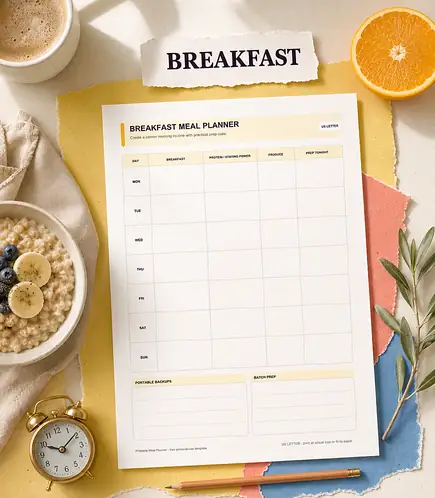
Breakfast planning does not require seven recipes. Busy mornings benefit from a small rotation, visible night-before tasks, ingredients stored where they are easy to reach, and a backup that can leave the house. The plan should match actual appetite and household needs rather than copying an idealized morning routine.
The weekly page will show two or three dependable breakfast formats, preparation cues for difficult mornings, and enough flexibility to avoid both boredom and unnecessary work. This guide turns that outcome into a repeatable paper workflow rather than a perfect menu that only works once. Start with the information you already have, make the few decisions that reduce the most friction, and leave visible room for the week to change.
Plan by morning type
Wake time, commute, exercise, school transport, and appetite vary across the week. Assigning the same effort to every morning ignores those constraints. Label mornings portable, quick at home, standard, or relaxed. Select breakfast only after the type is clear.
For example, Tuesday may need something packed, while Saturday can hold a cooked breakfast that creates useful components. On your planner, write the morning type beside the day and keep the busiest two visually obvious. Review that note at the end of the week so the next plan reflects what actually happened rather than what you hoped would happen.
- Include departure time.
- Consider who prepares and who eats.
- Leave weekend routines separate when appropriate.
Rotate two dependable formats
A small rotation reduces shopping and setup while preventing one breakfast from becoming compulsory every day. Format can stay stable while ingredients change. Choose two core formats such as oats, eggs with toast, yogurt or an alternative with fruit, breakfast wraps, or smoothies. Alternate them and add a third option only where useful.
For example, oats can vary through fruit and toppings, while eggs can appear as a sandwich or simple plate. On your planner, write the format and one variation rather than a long recipe title. Review that note at the end of the week so the next plan reflects what actually happened rather than what you hoped would happen.
- Use formats accepted by the people eating.
- Avoid buying unique ingredients for each day.
- Keep preparation within the available morning type.
Make night-before work visible
Breakfast preparation often fails because soaking, thawing, packing, or locating equipment is left to the morning. A written cue moves that decision earlier. List only tasks that materially reduce morning friction: portioning, setting out dry ingredients, preparing a safe chilled item, or placing a container near the bag.
For example, assemble overnight oats safely, thaw a suitable component in the refrigerator, or pack utensils before bed. On your planner, write the exact task in the prep-tonight column and check it during evening cleanup. Review that note at the end of the week so the next plan reflects what actually happened rather than what you hoped would happen.
- Refrigerate perishable food appropriately.
- Avoid prep that harms quality.
- Keep required containers clean and available.
Use shared ingredients across breakfast
Breakfast-specific purchases can create partial packages when they have no role elsewhere. Flexible ingredients reduce waste and make substitutions easier. Choose fruit, grains, eggs or alternatives, yogurt or alternatives, breads, nuts, seeds, or other suitable foods that support several breakfasts and possibly snacks.
For example, fruit can top oats, accompany toast, or enter a smoothie, while cooked vegetables can support eggs and lunch. On your planner, mark at least two uses beside highly perishable ingredients. Review that note at the end of the week so the next plan reflects what actually happened rather than what you hoped would happen.
- Check what is already open.
- Buy quantities that match the rotation.
- Keep allergy and individual needs central.
Prepare a portable backup
Some mornings will run late despite planning. A portable option prevents the plan from depending on a perfect departure. Choose one backup that stores reliably and can be eaten in the actual commute or destination where permitted. Replace it immediately after use.
For example, a suitable bar plus fruit, a freezer breakfast item, or a packed yogurt alternative may function as a backup. On your planner, list the backup and storage location in the notes area. Review that note at the end of the week so the next plan reflects what actually happened rather than what you hoped would happen.
- Confirm portability and storage.
- Include any needed utensil.
- Choose something acceptable enough to use.
Run a five-minute breakfast reset
Small breakfast systems become unreliable when containers, produce, and backups are not replenished. A short reset restores the station. Once a week, check remaining ingredients, wash or portion suitable items, return reusable containers, and choose next week's two formats.
For example, Sunday evening can include checking oats, fruit, eggs or alternatives, freezer portions, and clean travel containers. On your planner, keep a short restock and prep list beside the breakfast planner. Review that note at the end of the week so the next plan reflects what actually happened rather than what you hoped would happen.
- Remove outdated planned items.
- Restock the backup after use.
- Change the rotation only when it no longer helps.
Make the plan work for you
Breakfast becomes easier when the week repeats a small number of useful decisions. Match formats to morning types, move one task to the night before, and maintain a backup instead of designing seven separate breakfasts. Begin with this one action: identify the two mornings with the least time, then choose one portable breakfast and one at-home breakfast the household already uses successfully Keep the completed sheet where you will see it, make one adjustment after the week is over, and reuse the parts that genuinely saved time, money, or attention.