8 minute read
Vegetarian Meal Planning With More Variety and Less Prep
Plan varied vegetarian meals by rotating protein sources, preparing flexible components, reusing produce, building flavor, and keeping backups.

Vegetarian meal planning becomes repetitive when every meal starts with the same substitute or requires a new specialty recipe. Greater variety usually comes from rotating protein sources, changing the meal format, and preparing neutral components that can accept different flavors. Individual nutrition needs vary, so this guide focuses on household organization rather than prescribed intake.
The weekly plan will show diverse meal structures, visible protein sources, shared produce, and a manageable preparation strategy without seven isolated recipes. This guide turns that outcome into a repeatable paper workflow rather than a perfect menu that only works once. Start with the information you already have, make the few decisions that reduce the most friction, and leave visible room for the week to change.
Rotate protein sources across the week
Relying on one bean, cheese, egg, or substitute can make meals feel repetitive and may not suit every household need. Visibility helps create variety. Choose several appropriate protein sources such as beans, lentils, tofu, tempeh, eggs, dairy or alternatives, nuts, seeds, or combinations. Follow individual guidance where needed.
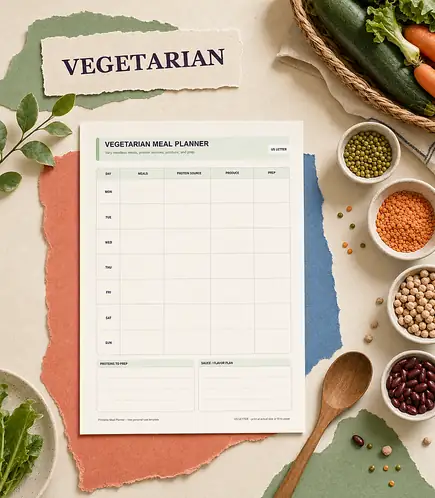
For example, lentils can support pasta sauce, tofu a stir-fry, and beans a taco meal while other days use household-preferred choices. On your planner, write the main protein source beside each meal rather than assuming it is included. Review that note at the end of the week so the next plan reflects what actually happened rather than what you hoped would happen.
- Use sources accepted by the household.
- Respect allergies and dietary requirements.
- Consult a qualified professional for personalized needs.
Vary meal format before buying more ingredients
The same core ingredients can feel different in bowls, soups, wraps, pasta, tray meals, or salads. Format provides variety without a longer list. Distribute several meal formats across the week and avoid repeating the same texture or preparation on consecutive days.
For example, chickpeas can appear roasted in a bowl, mashed in a sandwich, or simmered in a stew. On your planner, write the format beside each meal and scan the week for repetition. Review that note at the end of the week so the next plan reflects what actually happened rather than what you hoped would happen.
- Mix warm and cool meals where appropriate.
- Vary crisp, soft, roasted, and sauced textures.
- Match formats to available cooking time.
Prepare neutral building blocks
A strongly flavored batch can lock several meals into one direction. Neutral components preserve flexibility and reduce prep. Cook one grain, prepare one protein component, and wash or roast several vegetables with simple seasoning. Add final sauces and herbs by meal.
For example, plain lentils can enter soup or a salad, while roasted vegetables can accompany pasta or fill wraps. On your planner, list two destinations beside every batch component. Review that note at the end of the week so the next plan reflects what actually happened rather than what you hoped would happen.
- Store components separately.
- Cool prepared food appropriately.
- Season at least one component lightly.
Build flavor with a small sauce plan
Vegetarian meals can feel repetitive when shared ingredients always receive the same seasoning. A few sauces create contrast efficiently. Choose two sauces, dressings, spice directions, or finishing combinations that use overlapping ingredients. Prepare only the amount likely to be used.
For example, a lemon-herb sauce and a smoky tomato sauce can send the same grain and vegetables in different directions. On your planner, write the flavor plan beside the meal rather than adding several specialty products to the list. Review that note at the end of the week so the next plan reflects what actually happened rather than what you hoped would happen.
- Use condiments already available.
- Check hidden animal-derived ingredients if relevant.
- Keep sauces separate until serving when useful.
Link perishable produce across meals
New vegetarian recipes can each call for a different vegetable or herb, creating partial packages and waste. Produce bridges make the list practical. Choose several vegetables that can work in at least two formats and schedule the most delicate early. Use frozen or durable produce later.
For example, spinach can enter eggs or tofu, pasta, and soup, while cabbage can support slaw and a stir-fry. On your planner, mark both planned uses beside perishable purchases. Review that note at the end of the week so the next plan reflects what actually happened rather than what you hoped would happen.
- Check produce already at home.
- Sequence delicate ingredients first.
- Freeze suitable surplus before it declines.
Keep a complete vegetarian backup
A backup that contains only pasta or a side may not meet the household's expectation for a meal. The combination should be intentional. Choose one stable meal formula using pantry or freezer ingredients, including the components needed to make it satisfying for your household.
For example, lentil pasta with vegetables, bean quesadillas, or freezer soup with bread may serve as a backup. On your planner, list the complete combination and replace ingredients after use. Review that note at the end of the week so the next plan reflects what actually happened rather than what you hoped would happen.
- Choose a backup people willingly eat.
- Include seasoning and sides.
- Keep preparation instructions simple.
Make the plan work for you
Vegetarian variety comes from rotating sources, formats, textures, and flavors more than from collecting unrelated recipes. Keep the component system flexible and make the main protein visible during planning. Begin with this one action: list the vegetarian protein sources and meal formats your household already uses, then choose several different pairings before searching for anything new Keep the completed sheet where you will see it, make one adjustment after the week is over, and reuse the parts that genuinely saved time, money, or attention.