8 minute read
Gluten-Free Meal Planning Basics for a Shared Kitchen
Organize a gluten-free weekly menu with label checks, substitutions, separate preparation, shared-kitchen notes, backups, and professional guidance.

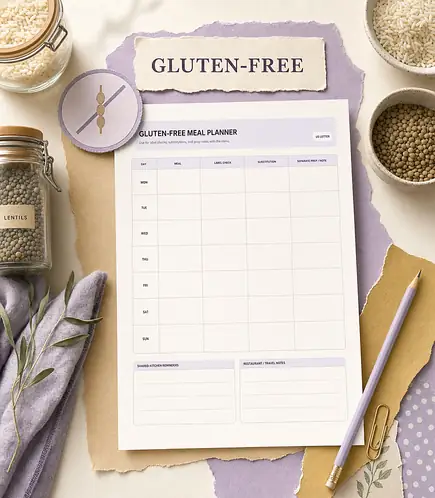
Gluten-free planning in a shared kitchen involves more than replacing bread or pasta. Product labels, ingredients that change, shared equipment, storage, restaurant plans, and the reason for avoiding gluten all affect what is appropriate. This guide supports organization only; diagnosis, exposure thresholds, and individual nutrition care belong with qualified professionals.
The page will keep meal ideas, verified products, substitutions, and household preparation notes together so safety-relevant decisions are not left to memory. This guide turns that outcome into a repeatable paper workflow rather than a perfect menu that only works once. Start with the information you already have, make the few decisions that reduce the most friction, and leave visible room for the week to change.
Build meals from naturally compatible foundations
Starting every meal with a specialty replacement can increase cost and label complexity. Many meals can begin with ingredients that fit the household's established gluten-free approach. Choose appropriate grains or starches, proteins, vegetables, fruits, dairy or alternatives, fats, herbs, and spices based on verified products and personal guidance.
For example, a rice bowl, potato-based tray meal, soup, or suitable corn-based meal may require fewer replacements than adapting a complex recipe. On your planner, write the base ingredient and any product that still requires verification. Review that note at the end of the week so the next plan reflects what actually happened rather than what you hoped would happen.
- Follow individual medical guidance.
- Verify packaged ingredients.
- Do not assume naturally gluten-free means free from cross-contact.
Create a label-check point before shopping
Formulations, facilities, and certifications can change. A product used previously should not be treated as permanently verified. Identify packaged ingredients and check current labels, manufacturer information, and the standard appropriate to the household. Keep uncertain products off the plan until verified.
For example, broth, sauces, spice blends, oats, processed proteins, and snacks may need specific attention. On your planner, mark verified date or substitute beside relevant products. Review that note at the end of the week so the next plan reflects what actually happened rather than what you hoped would happen.
- Read the full current label.
- Use reliable manufacturer information where needed.
- Recheck replacement products.
Write shared-kitchen preparation notes
A safe ingredient can become unsuitable through shared preparation depending on the person's needs. Procedures must be explicit and individualized. Follow the household's established guidance for surfaces, utensils, appliances, condiments, storage, and serving. Use the planner as a reminder, not the complete protocol.
For example, a note may remind the cook to use designated equipment or a separate condiment according to the household plan. On your planner, place a short see kitchen procedure cue beside meals requiring special handling. Review that note at the end of the week so the next plan reflects what actually happened rather than what you hoped would happen.
- Keep authoritative instructions current.
- Communicate with every cook.
- Avoid inventing a universal cross-contact rule.
Plan substitutions by function
A substitute works when it performs the needed role in the recipe, fits dietary requirements, and can be obtained reliably. Name similarity is not enough. Identify whether the ingredient provides structure, thickening, binding, texture, or flavor, then select a verified alternative known to work in that application.
For example, a pasta replacement must suit the sauce and cooking method, while a thickener requires a different functional check. On your planner, write the exact verified product or tested substitution beside the meal. Review that note at the end of the week so the next plan reflects what actually happened rather than what you hoped would happen.
- Use tested recipes for complex baking.
- Confirm all components, including garnishes.
- Avoid last-minute unverified swaps.
Keep a verified backup meal
Schedule changes or unavailable products create more risk when the only alternative must be chosen quickly. A verified backup reduces improvisation. Maintain one or two complete meals using products and procedures already established as suitable for the household. Replace ingredients after use.
For example, a labeled freezer meal or a simple pantry combination can provide a known option. On your planner, list the full backup, location, and any preparation reminder. Review that note at the end of the week so the next plan reflects what actually happened rather than what you hoped would happen.
- Recheck labels when restocking.
- Keep the backup complete.
- Store it according to household procedures.
Review problems with the right professional
Symptoms, nutritional adequacy, diagnosis, and exposure concerns cannot be resolved by a printable planner. Recording facts can support a qualified conversation. Use the page to note product, meal, timing, and preparation details without drawing medical conclusions. Contact the appropriate clinician or dietitian for individual concerns.
For example, a factual note can identify the current product label and kitchen process without claiming what caused a symptom. On your planner, keep objective details separate from planning preferences. Review that note at the end of the week so the next plan reflects what actually happened rather than what you hoped would happen.
- Do not self-diagnose from a food log.
- Preserve labels or product details when advised.
- Update the meal-planning procedure from qualified guidance.
Make the plan work for you
A gluten-free planner should reduce forgotten checks and shared-kitchen confusion, not replace expert care. Keep verified products, substitutions, and preparation reminders visible and update them whenever guidance or labels change. Begin with this one action: write the household's current professional guidance and kitchen procedures in their authoritative location, then use the planner only to reference those instructions Keep the completed sheet where you will see it, make one adjustment after the week is over, and reuse the parts that genuinely saved time, money, or attention.