8 minute read
Mediterranean-Style Meal Planning With Flexible Foods
Plan flexible Mediterranean-style meals around vegetables, whole grains, legumes, varied proteins, olive oil, herbs, leftovers, and shared components.

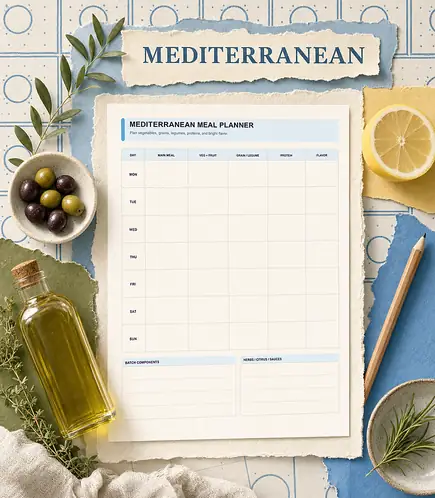
Mediterranean-style planning is more useful as a flexible pattern than a rigid list of named dishes. Meals can begin with vegetables, grains or other satisfying bases, legumes, varied proteins, flavorful fats, herbs, spices, and shared eating practices. Culture, budget, access, and individual health needs should shape the details rather than a generic internet menu.
The planner will show a varied weekly pattern, reusable vegetable and grain components, several legume meals, and flavor notes that make simple food satisfying. This guide turns that outcome into a repeatable paper workflow rather than a perfect menu that only works once. Start with the information you already have, make the few decisions that reduce the most friction, and leave visible room for the week to change.
Start with vegetables and the seasonal context
Vegetables become easier to use when they influence the meal rather than appear as an afterthought. Availability and season can guide price and quality without requiring strict rules. Choose a small set of vegetables that can be roasted, simmered, served raw, or added to grains and legumes. Schedule delicate items early.
For example, tomatoes and cucumbers may support salads, while eggplant, peppers, or zucchini can roast for bowls and pasta. On your planner, write the vegetable method beside each meal. Review that note at the end of the week so the next plan reflects what actually happened rather than what you hoped would happen.
- Use produce available in your location.
- Mix raw and cooked preparations where suitable.
- Plan a destination for likely surplus.
Use grains and legumes as flexible anchors
Grains and legumes can support several meals and make batch preparation valuable. They should still vary in format and flavor. Cook one versatile grain or base and plan legumes several times in forms the household enjoys. Follow individual dietary guidance where needed.
For example, chickpeas can enter a stew and salad, while a cooked grain can support a warm bowl and a side dish. On your planner, note batch quantities and the destination of each portion. Review that note at the end of the week so the next plan reflects what actually happened rather than what you hoped would happen.
- Cool cooked food appropriately.
- Vary sauces and textures.
- Freeze surplus when useful.
Plan varied proteins without rigid frequency rules
Households differ in culture, preference, budget, allergy, and health needs. A paper planner should support visibility rather than prescribe a universal schedule. Record legumes, fish or seafood where used, eggs, dairy or alternatives, poultry, meat, or plant-based choices according to the household's approach and qualified guidance.
For example, one week may use lentils, fish, yogurt or an alternative, and chicken, while another is more plant-based. On your planner, write the main protein source so variety can be reviewed accurately. Review that note at the end of the week so the next plan reflects what actually happened rather than what you hoped would happen.
- Respect individual requirements.
- Use sources available and affordable locally.
- Avoid treating one menu as medical advice.
Build flavor through herbs, acid, and sauces
Simple ingredients become satisfying when flavor is planned. Last-minute seasoning can lead to many one-use condiments or repetitive meals. Choose herbs, spices, citrus, vinegar, garlic, and sauces that can cross several meals. Prepare small amounts and keep finishing elements separate.
For example, lemon, parsley, and a yogurt or plant-based sauce can support grains, vegetables, and proteins in different combinations. On your planner, assign each flavor element to at least two meals. Review that note at the end of the week so the next plan reflects what actually happened rather than what you hoped would happen.
- Use pantry seasonings first.
- Check dietary and allergy needs.
- Keep delicate herbs scheduled early.
Plan shared plates and leftovers intentionally
Shared components can create easy meals, but leftovers still need a destination. A table of several small dishes may otherwise produce many small containers. Decide which components will become lunch, a second plate, soup, wraps, or freezer portions. Package them according to the next use.
For example, roasted vegetables and grains can become lunch bowls, while beans can move into soup. On your planner, draw the next-use connection before cooking the larger meal. Review that note at the end of the week so the next plan reflects what actually happened rather than what you hoped would happen.
- Reserve portions during cleanup.
- Use leftovers within appropriate storage time.
- Avoid making excess solely for visual abundance.
Review the pattern rather than individual perfection
One meal cannot display every characteristic of a broad eating pattern. Weekly review provides more useful perspective than judging a single plate. Look across the week for produce variety, legumes, whole grains or other bases, protein diversity, and enjoyable shared meals. Adapt according to personal guidance.
For example, a quick pantry dinner can still belong in a varied week without needing to imitate a specific regional dish. On your planner, keep one successful component combination and one practical adjustment. Review that note at the end of the week so the next plan reflects what actually happened rather than what you hoped would happen.
- Avoid rigid scoring.
- Consider cost and effort.
- Use qualified advice for medical nutrition needs.
Make the plan work for you
Mediterranean-style planning works best as an adaptable weekly pattern grounded in real ingredients and household context. Let vegetables, grains, legumes, varied proteins, and bright flavors create the structure without turning it into a rigid checklist. Begin with this one action: choose three vegetables, one or two grains or starchy bases, several legumes or other appropriate proteins, and the herbs, citrus, or sauces already available Keep the completed sheet where you will see it, make one adjustment after the week is over, and reuse the parts that genuinely saved time, money, or attention.