8 minute read
Vegan Protein Meal Planning Without Repeating Every Meal
Plan varied vegan meals by rotating plant protein sources, pairing flexible components, using sauces, checking labels, and preparing practical backups.

A vegan meal plan can become narrow when one familiar protein appears in every dinner or when each recipe requires a separate set of specialty ingredients. A better system rotates plant-protein sources and meal formats, uses sauces to create contrast, and checks practical details such as labels, preparation time, and individual nutrition needs.
The week will contain visible plant-protein choices, several reusable components, and enough pantry or freezer support to remain practical on busy days. This guide turns that outcome into a repeatable paper workflow rather than a perfect menu that only works once. Start with the information you already have, make the few decisions that reduce the most friction, and leave visible room for the week to change.
Make the main plant protein visible
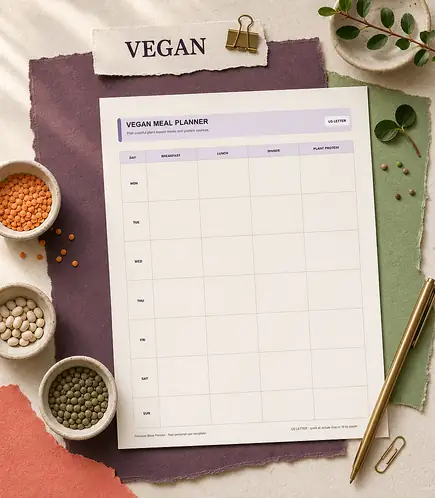
A meal title such as salad or pasta may not show whether the planned combination fits the household's needs. Visibility supports variety and shopping accuracy. Write the principal protein-rich component beside every main meal. Rotate sources and follow individualized nutrition guidance when appropriate.
For example, tofu may support a stir-fry, lentils a sauce, beans a bowl, and seeds or soy foods another meal. On your planner, use the protein-source column rather than assuming a garnish will provide the main component. Review that note at the end of the week so the next plan reflects what actually happened rather than what you hoped would happen.
- Choose sources suitable for the household.
- Check allergies and label requirements.
- Consult a qualified professional for personalized targets.
Rotate preparation and texture
The same protein can feel repetitive when it is always soft, sauced, or served in a bowl. Preparation changes experience without requiring another purchase. Distribute roasted, simmered, crumbled, blended, crisped, or chilled formats where appropriate. Match the method to the ingredient and available time.
For example, chickpeas can be roasted for bowls, mashed for sandwiches, or simmered in stew. On your planner, write the preparation verb beside repeated ingredients. Review that note at the end of the week so the next plan reflects what actually happened rather than what you hoped would happen.
- Use methods appropriate to the ingredient.
- Balance high-effort and quick preparations.
- Keep one component neutral for reuse.
Build meals from flexible components
Seven complete recipes create more work than a small component system. Flexible parts can support bowls, wraps, soups, salads, and skillet meals. Prepare a grain or starch, one or two protein components, vegetables, and sauces separately. Assemble according to the day's schedule.
For example, rice, lentils, roasted vegetables, greens, and two sauces can produce several distinct combinations. On your planner, list at least two destinations for each batch-prepared component. Review that note at the end of the week so the next plan reflects what actually happened rather than what you hoped would happen.
- Store components safely and separately.
- Use delicate produce early.
- Freeze extra portions when appropriate.
Use sauces and toppings strategically
Flavor contrast helps shared components avoid monotony, but a shelf of one-use sauces increases cost and clutter. Planning keeps flavor efficient. Choose two flavor directions from condiments, herbs, spices, citrus, nuts, or seeds already available. Confirm products meet the household's dietary requirements.
For example, a tahini-lemon sauce and a tomato-chili sauce can transform similar grains and vegetables. On your planner, assign each sauce to several meals before adding ingredients to the list. Review that note at the end of the week so the next plan reflects what actually happened rather than what you hoped would happen.
- Read labels for unexpected animal-derived ingredients.
- Respect allergies.
- Prepare realistic quantities.
Check convenience products before the busy day
Prepared plant-based foods can protect the plan, but cooking time, storage, and labels vary. Discovering a mismatch during a short break defeats their purpose. Confirm preparation instructions, serving count, dietary fit, and necessary sides while planning. Use convenience food as an intentional tool rather than a hidden failure.
For example, frozen dumplings may need vegetables and a sauce, while a prepared soup may need bread or a protein-rich side. On your planner, write the complete meal and preparation time on the planner. Review that note at the end of the week so the next plan reflects what actually happened rather than what you hoped would happen.
- Check labels each time products change.
- Include required sides.
- Keep one stable convenience backup.
Review source variety and practical effort
A plan can look varied by recipe title while relying on one source repeatedly or demanding too much preparation. Review should examine both. Count the main plant-protein sources and mark the meals that required more effort than expected. Retain combinations that provided variety efficiently.
For example, three different bowls may still use the same protein, while one neutral batch may support genuine variety through format and sauce. On your planner, keep one source to rotate in and one high-value meal to repeat. Review that note at the end of the week so the next plan reflects what actually happened rather than what you hoped would happen.
- Avoid judging the plan from names alone.
- Notice which sources the household actually used.
- Adjust according to qualified nutrition guidance where needed.
Make the plan work for you
Vegan planning becomes more varied when protein sources, textures, formats, and flavors are visible on the page. Build a flexible component system and use convenience options deliberately rather than requiring every meal to start from scratch. Begin with this one action: list the beans, lentils, tofu, tempeh, seitan where suitable, soy foods, nuts, seeds, and other protein-rich choices the household actually enjoys Keep the completed sheet where you will see it, make one adjustment after the week is over, and reuse the parts that genuinely saved time, money, or attention.