8 minute read
Two-Week Meal Planning Without Wasting Fresh Food
Plan 14 days of meals without wasting produce by sequencing fresh, frozen, and pantry foods, scheduling flexible meals, and using a mid-cycle reset.

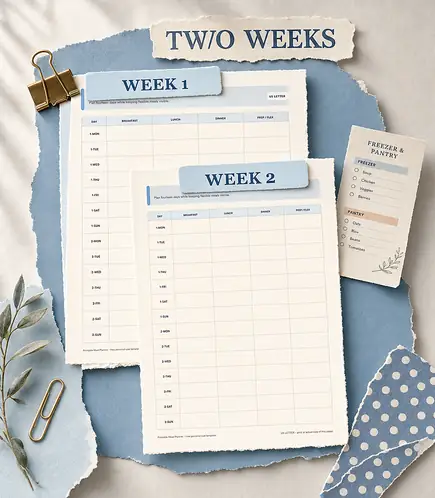
Two-week meal planning can reduce shopping trips and repeated decision-making, but it fails when fourteen days are treated like two identical fresh-food weeks. A better plan changes ingredient strategy over time: delicate food is used first, sturdy produce bridges the middle, and freezer or pantry meals protect the final days. A short reset keeps the second week realistic.
The result is a fourteen-day plan with a deliberate freshness sequence, enough flexibility for schedule changes, and no expectation that every ingredient will remain perfect for two full weeks. This guide turns that outcome into a repeatable paper workflow rather than a perfect menu that only works once. Start with the information you already have, make the few decisions that reduce the most friction, and leave visible room for the week to change.
Map fourteen days of schedule before food
Longer plans contain more opportunities for travel, events, fatigue, and changed appetites. If those conditions are hidden, the plan will contain more cooked meals than the household can realistically complete. Mark work patterns, school commitments, meals away, and weekends. Count the meals that genuinely need planning, then reserve at least two flexible slots across the fourteen days.
For example, a weekend visit may remove two dinners, while a late shift may require a packed meal and a simple post-shift option rather than a family recipe. On your planner, label fixed commitments first and keep flexible slots visible instead of filling every box. Review that note at the end of the week so the next plan reflects what actually happened rather than what you hoped would happen.
- Mark meals eaten away from home.
- Identify the second week's busiest nights.
- Reserve one flexible meal in each week.
Sequence ingredients by how long they stay useful
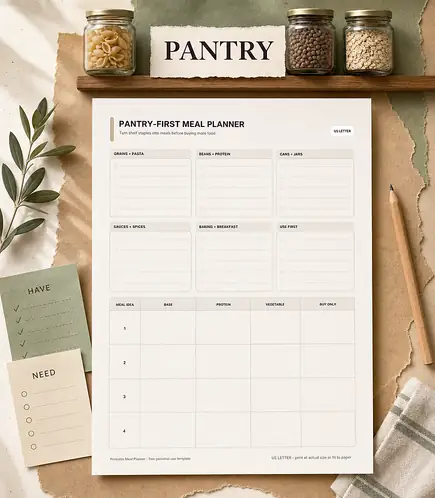
Freshness is a scheduling constraint. Tender greens and berries usually belong earlier than cabbage, carrots, frozen vegetables, dry grains, or canned beans. Assign delicate ingredients to the first three or four days, durable fresh foods to the middle, and freezer or pantry-supported meals to later days. Adjust for the actual products and storage conditions you use.
For example, early salads can give way to roasted root vegetables, then a frozen-vegetable curry or pantry pasta during the final stretch. On your planner, underline meals that depend on delicate food and circle the later meals that remain stable. Review that note at the end of the week so the next plan reflects what actually happened rather than what you hoped would happen.
- Use ripe produce before newly purchased sturdy produce.
- Avoid buying fourteen days of fragile herbs.
- Keep late-plan meals independent of one exact fresh item.
Build overlapping ingredient groups
Fourteen unrelated recipes create an oversized grocery list and many partial packages. Ingredient groups let the plan change form without requiring a new set of food every day. Choose several anchors such as a grain, a sauce, a protein, and two durable vegetables. Use them in different combinations across the first and second weeks, freezing a portion when quality would otherwise decline.
For example, a batch of beans can support tacos, soup, and grain bowls, while one cabbage can appear in slaw, stir-fry, and a roasted side. On your planner, draw lines between meals that share an ingredient and note when the component should be frozen. Review that note at the end of the week so the next plan reflects what actually happened rather than what you hoped would happen.
- Reuse ingredients, not necessarily complete meals.
- Change texture, seasoning, or serving format.
- Freeze early rather than waiting until food is nearly unusable.
Protect the second week with freezer meals
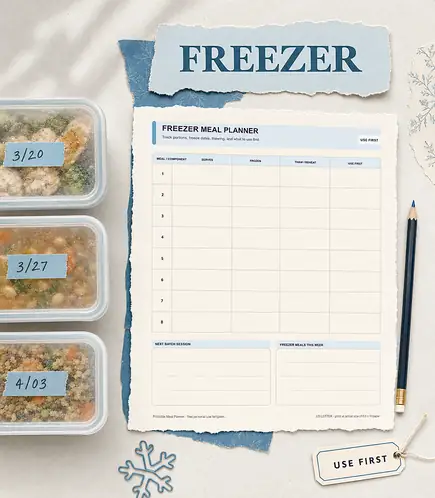
The second week is where motivation and fresh ingredients are most likely to change. Planned freezer support prevents the remaining menu from depending on ideal conditions. Schedule two frozen components or complete meals during days eight through fourteen. These can be prepared during the first week, already available, or selected from dependable store-bought options.
For example, freeze half of a soup made on Day 2 for Day 10, or use frozen dumplings and vegetables on the evening after a long workday. On your planner, write the thawing date beside each freezer meal rather than only the serving date. Review that note at the end of the week so the next plan reflects what actually happened rather than what you hoped would happen.
- Confirm freezer portions before shopping.
- Label newly frozen food with its destination.
- Keep one freezer meal unassigned as a backup.
Schedule a ten-minute mid-cycle reset
A two-week plan needs one maintenance point because produce, leftovers, and schedules will not behave exactly as expected. The reset is part of the plan, not a correction for failure. On Day 6 or 7, review remaining food, freeze anything that will not be used soon, move a later meal forward, and decide whether a very small top-up shop is worthwhile.
For example, extra cooked vegetables may become tomorrow's lunch, while an untouched freezer meal can remain later and free space for a social dinner. On your planner, write three reset actions in the notes area and cross them off immediately. Review that note at the end of the week so the next plan reflects what actually happened rather than what you hoped would happen.
- Check opened dairy or alternatives and cooked food.
- Move late-week freezer items to thaw safely.
- Top up only items with a defined meal destination.
Review the plan in two separate weeks
A fourteen-day plan may look successful overall while one week is overloaded and the other relies too heavily on convenience food. Separate review reveals where the sequence needs improvement. At the end, note which ingredients lasted well, which meals moved, and whether the second week needed more prepared support. Use those observations to adjust quantities and timing next cycle.
For example, if fresh produce ran out by Day 9, you may need one more durable vegetable rather than another complete shopping trip. On your planner, keep one lesson for Week 1 and one for Week 2 beside the next two-week planner. Review that note at the end of the week so the next plan reflects what actually happened rather than what you hoped would happen.
- Notice which foods declined before their planned day.
- Compare planned and actual flexible meals.
- Retain the successful late-week backups.
Make the plan work for you
Two-week planning succeeds through sequencing and maintenance, not prediction. Treat freshness as a timeline, give the second week freezer support, and expect one short reset; this makes a longer plan both more useful and less wasteful. Begin with this one action: divide the planner into early, middle, and late phases, then mark the mid-cycle date when you will review produce, move freezer food, and make any small top-up purchase Keep the completed sheet where you will see it, make one adjustment after the week is over, and reuse the parts that genuinely saved time, money, or attention.