8 minute read
How to Make a Weekly Meal Plan in 15 Minutes
Build a realistic weekly meal plan in 15 minutes with a calendar-first routine, a short favorites list, flexible nights, and one grocery check.

A fifteen-minute meal plan is possible when the goal is to make the next week easier, not to search for seven impressive recipes. The fastest routine begins with the calendar, uses meals you already know, and limits new decisions. It also treats leftovers and changing plans as part of the system rather than evidence that the system failed.
At the end of fifteen minutes, you should know which dinners matter, what needs advance preparation, where leftovers will be used, and which ingredients are genuinely missing. This guide turns that outcome into a repeatable paper workflow rather than a perfect menu that only works once. Start with the information you already have, make the few decisions that reduce the most friction, and leave visible room for the week to change.
Minutes 0-2: mark fixed plans and busy evenings
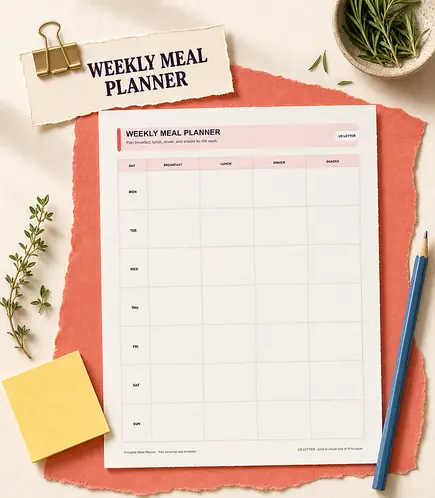
The calendar determines what kind of meal will work, so recipe selection should never be the first step. Late meetings, lessons, travel, and existing dinner plans immediately reduce the number of meals you need to invent. Write those commitments directly into the meal grid and label the most demanding nights as quick, leftovers, packed, or already handled. This turns an empty seven-day page into a smaller and more accurate planning problem.
For example, Tuesday may need a reheatable dinner after practice, while Friday is already a meal out and Sunday can use something that cooks slowly while you are home. On your planner, write the time constraint beside each affected day instead of expecting yourself to remember it later. Review that note at the end of the week so the next plan reflects what actually happened rather than what you hoped would happen.
- Cross out meals that are already provided elsewhere.
- Circle the two evenings with the least cooking time.
- Mark one evening that can absorb a schedule change.
Minutes 2-5: choose three dependable meals
Familiar meals are faster to choose, shop for, and prepare because you already understand the quantities and effort. A useful weekly plan normally needs more dependable meals than new recipes. Select three meals from a written favorites list or recent successful weeks. Vary the cooking method or main ingredient enough that the meals do not feel identical, but do not force novelty into every slot.
For example, you might choose tacos, vegetable pasta, and a sheet-pan dinner because the household reliably eats them and each fits a different evening. On your planner, place each dependable meal on a night that matches its cooking time and note any ingredient that must be thawed. Review that note at the end of the week so the next plan reflects what actually happened rather than what you hoped would happen.
- Choose meals you can cook without rereading a long recipe.
- Use at least one pantry or freezer staple.
- Avoid scheduling the most demanding meal on the busiest night.
Minutes 5-8: create one intentional leftovers chain
Leftovers save time only when they have a named destination. Cooking extra food without deciding when it will be eaten often creates an unlabeled container that is forgotten. Choose one meal that can produce a useful component or complete second serving. Link it to a later lunch, a transformed dinner, or a freezer portion while the original meal is still being planned.
For example, extra roasted vegetables from Monday can fill Wednesday wraps, or a double pot of soup can cover Thursday lunch and one freezer meal. On your planner, draw a small arrow from the original meal to the day where the extra food will be used. Review that note at the end of the week so the next plan reflects what actually happened rather than what you hoped would happen.
- Reuse a component within a realistic storage window.
- Change the format or sauce if repetition is a concern.
- Freeze the extra portion immediately if it has no near-term destination.
Minutes 8-10: add a backup and a flexible slot
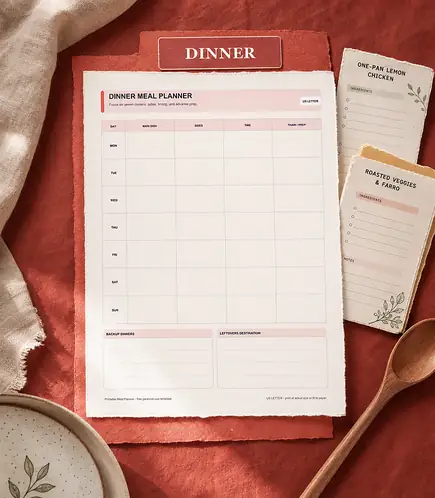
A rigid plan breaks when one meeting runs late or an ingredient is unavailable. A backup meal protects the week without requiring a second complete menu. Choose one low-effort meal made from stable ingredients, then leave one slot deliberately flexible. The flexible slot can become leftovers, a social plan, or the meal that gets moved when the schedule changes.
For example, eggs and toast, frozen dumplings with vegetables, canned-bean quesadillas, or pasta with a pantry sauce can all function as practical backups. On your planner, write the backup in the notes area rather than assigning it to a fixed day before it is needed. Review that note at the end of the week so the next plan reflects what actually happened rather than what you hoped would happen.
- Use ingredients that will still be available late in the week.
- Keep the backup faster than ordering or collecting takeout.
- Do not treat the flexible slot as missing work.
Minutes 10-13: scan the kitchen before listing groceries
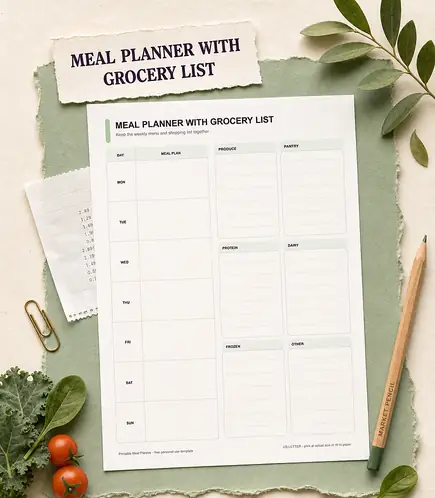
A plan made without a quick inventory often duplicates food and overlooks ingredients that should be used first. The kitchen scan is more valuable than searching for another recipe. Check the refrigerator, freezer, and the pantry shelves that contain the planned staples. Cross off what is available, identify open packages, and adjust one meal when a use-first ingredient fits naturally.
For example, half a cabbage can replace salad greens in tacos, while cooked rice may turn a planned grain bowl into a faster fried-rice dinner. On your planner, add only the missing quantity to the grocery list and mark use-first ingredients beside the earliest suitable meal. Review that note at the end of the week so the next plan reflects what actually happened rather than what you hoped would happen.
- Look behind front-row items in the refrigerator.
- Check quantities rather than only item names.
- Confirm that planned freezer food has enough time to thaw.
Minutes 13-15: verify effort, variety, and ownership
The final check catches plans that look reasonable meal by meal but create too much total work. It also makes cooking responsibilities and advance tasks visible to other people. Read the week from left to right and count demanding cooking nights, repeated ingredients, and preparation cues. Move one meal if necessary, then assign the cook or helper when the household shares responsibility.
For example, three oven meals in a row may be fine, but three unfamiliar recipes plus a weekend prep project is unlikely to survive a busy week. On your planner, circle the hardest meal, underline the easiest meal, and add one visible reminder for thawing or advance chopping. Review that note at the end of the week so the next plan reflects what actually happened rather than what you hoped would happen.
- Limit new recipes to the capacity you actually have.
- Check that vegetables or sides are not forgotten.
- Post the completed plan where the household will see it.
Make the plan work for you
Speed comes from reducing the number of decisions, not from writing faster. Reuse a favorites list, make one leftovers connection, and keep a stable backup available; those three habits will make future fifteen-minute planning sessions even shorter. Begin with this one action: set a fifteen-minute timer, place the weekly calendar beside a blank planner, and mark the three busiest evenings before choosing any food Keep the completed sheet where you will see it, make one adjustment after the week is over, and reuse the parts that genuinely saved time, money, or attention.