8 minute read
How to Build a Grocery List From a Meal Plan
Turn a weekly meal plan into an organized grocery list by checking inventory, totaling quantities, grouping store sections, and planning substitutions.

A grocery list should be the final expression of a meal plan, not a collection of foods that might become meals. The difference is quantities, timing, and context. When every item is connected to a planned meal or dependable household need, the list becomes shorter, duplicate purchases fall, and substitutions are easier to make in the store.
A finished list should show exactly what is missing, how much is needed across all planned meals, where each item is found, and which purchases can change if price or availability changes. This guide turns that outcome into a repeatable paper workflow rather than a perfect menu that only works once. Start with the information you already have, make the few decisions that reduce the most friction, and leave visible room for the week to change.
Translate every planned meal into ingredients
Vague meal names hide missing ingredients. Writing tacos on a planner does not reveal whether the household needs tortillas, beans, vegetables, salsa, or only one of those items. Read each meal and list the ingredients that are necessary for it to function, including sides and toppings that are easy to forget. Separate essential ingredients from optional enhancements so the list can adapt to budget.
For example, a grain-bowl dinner may require rice, chickpeas, roasted vegetables, and sauce, while seeds or avocado can remain optional. On your planner, place a small mark beside each essential item after it has been transferred to the list. Review that note at the end of the week so the next plan reflects what actually happened rather than what you hoped would happen.
- Include side dishes and packed-lunch components.
- Check cooking basics such as oil, stock, and seasonings.
- Label optional items before entering the store.
Check inventory by quantity and condition
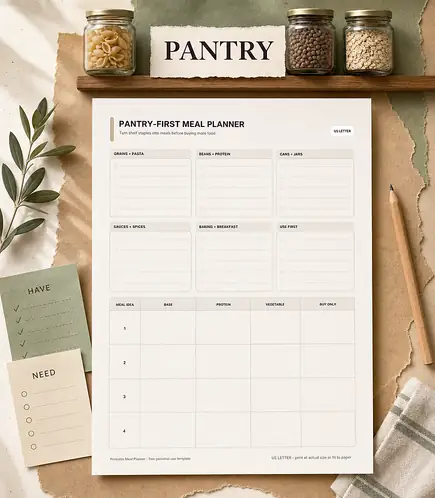
Seeing an ingredient at home does not mean there is enough or that it will still be usable. A half-empty jar and two tired carrots may not cover three planned meals. Check the refrigerator, freezer, and pantry with the planned quantities in mind. Note what is open, what should be used first, and what can substitute for an item on the draft list.
For example, one cup of rice may cover Tuesday but not the planned Friday fried rice, while frozen spinach may replace fresh spinach in a cooked dish. On your planner, write the amount already available next to the required amount before calculating what to buy. Review that note at the end of the week so the next plan reflects what actually happened rather than what you hoped would happen.
- Open produce drawers and check actual condition.
- Count freezer portions rather than guessing.
- Look for duplicate open packages.
Total repeated ingredients once
Ingredients often appear in several meals, and listing them separately leads to underbuying or duplicated lines. Combining quantities creates a list that matches the whole week. Add the amounts needed across recipes, subtract usable inventory, and convert the result into a practical package quantity. Keep the calculation simple enough that it can be checked in the store.
For example, if two meals need one onion each and a third needs half an onion, write three onions rather than three separate onion entries. On your planner, include the final number, weight, or package count beside items where quantity matters. Review that note at the end of the week so the next plan reflects what actually happened rather than what you hoped would happen.
- Combine ingredients with the same usable form.
- Do not combine fresh and frozen versions automatically.
- Round package sizes intentionally and plan any likely excess.
Group the list by the way you shop
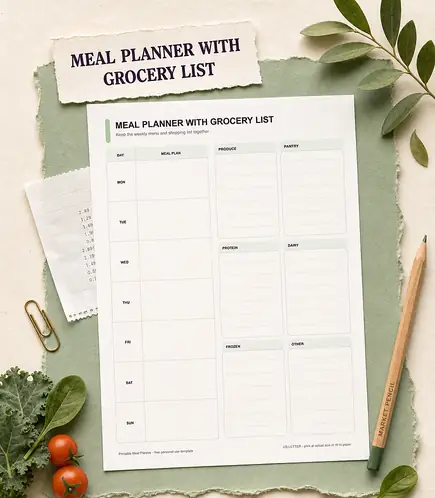
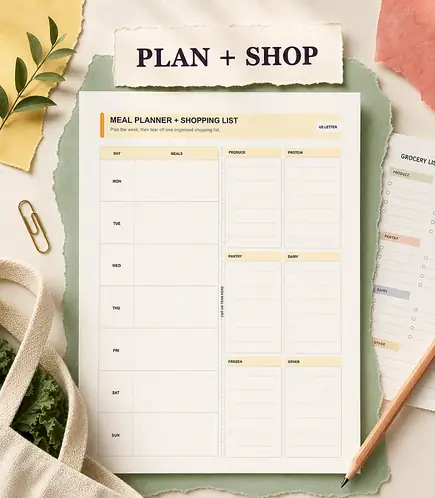
A list sorted by recipe makes shoppers cross the same store several times and increases forgotten items. Store-section grouping reduces backtracking and makes the final review easier. Use categories that match the actual store: produce, bakery, protein, dairy or alternatives, pantry, frozen, and household items. If you shop at two locations, mark the store as well.
For example, tortillas may belong under bakery in one store and pantry in another, so organize by your normal route rather than an abstract rule. On your planner, place every item in one category and keep uncategorized notes in a small review box. Review that note at the end of the week so the next plan reflects what actually happened rather than what you hoped would happen.
- Follow the path you normally walk through the store.
- Keep coupon or loyalty items beside their category.
- Separate items for another shop or market.
Attach a substitution rule to expensive items
A list without alternatives can force an overpriced purchase or cause an entire meal to be abandoned. One planned substitution preserves the meal's function. Identify the few items most likely to vary in price or availability and write an equivalent form, ingredient, or meal switch beside them. The alternative should use ingredients already on the list when possible.
For example, broccoli can become cabbage in a stir-fry, a costly fish can become beans in a grain bowl, or fresh berries can become another seasonal fruit. On your planner, use a slash between the preferred item and its acceptable substitute so only one is purchased. Review that note at the end of the week so the next plan reflects what actually happened rather than what you hoped would happen.
- Preserve the role of the ingredient in the meal.
- Check dietary and allergy requirements before substituting.
- Avoid buying both versions unless both have a planned use.
Do a final meal-to-list audit
The last review catches missing ingredients and list items that no longer belong to a meal. It also reveals whether the total week depends on too many perishable items. Point to each planned meal and confirm that its missing essentials appear on the list. Then point to each list item and name the meal or household use that justifies it.
For example, an extra bunch of herbs may be reasonable when it appears in three meals, but a specialty sauce for one optional recipe may not earn its place. On your planner, circle the most perishable purchases and schedule them early in the week. Review that note at the end of the week so the next plan reflects what actually happened rather than what you hoped would happen.
- Confirm breakfasts, lunches, snacks, and sides.
- Remove aspirational items with no realistic use.
- Photograph the final list if more than one person may shop.
Make the plan work for you
A strong grocery list is traceable: every purchase has a destination, every repeated ingredient has a total, and every fragile plan has a substitution. That traceability matters more than using a particular app or list format. Begin with this one action: write the full meal plan first, place every relevant recipe or ingredient note beside it, and do not add an item to the shopping list until you have checked whether it is already available Keep the completed sheet where you will see it, make one adjustment after the week is over, and reuse the parts that genuinely saved time, money, or attention.