8 minute read
A Simple Toddler Meal Planning Routine for Caregivers
Create a predictable toddler meal and snack routine with caregiver handoffs, familiar foods, optional learning foods, flexible appetite, and safety notes.

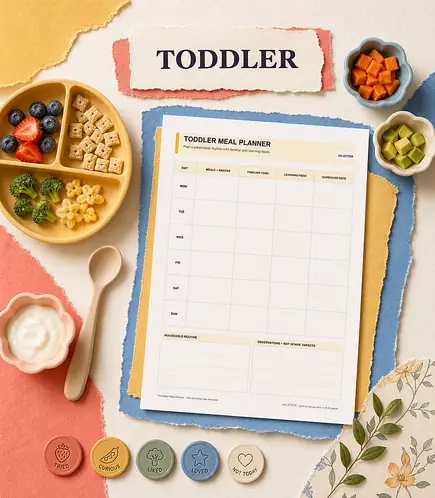
A toddler planner is most useful for coordinating routine, food availability, and caregiver communication. It should not prescribe universal portions or turn changing appetite into a score. A predictable rhythm of meals and snacks, familiar options, appropriate learning opportunities, and clear safety information can reduce daily improvisation while leaving room for individual needs.
The completed page will show when food is normally offered, which components are available, what caregivers need to know, and where flexibility is expected. This guide turns that outcome into a repeatable paper workflow rather than a perfect menu that only works once. Start with the information you already have, make the few decisions that reduce the most friction, and leave visible room for the week to change.
Map the daily rhythm before the menu
Toddlers often move between home, childcare, outings, and naps. A food plan that ignores those transitions can duplicate meals or create long unplanned gaps. Record the usual opportunities for meals and snacks along with the responsible caregiver. Keep timing approximate enough to adapt to sleep and the day's events.
For example, the morning snack may be provided at childcare on three days and at home on two days. On your planner, write location or caregiver initials beside handoff meals. Review that note at the end of the week so the next plan reflects what actually happened rather than what you hoped would happen.
- Include travel and childcare meals.
- Keep expectations flexible around changing days.
- Share important instructions directly with caregivers.
Use familiar foods to support predictability
Familiarity can make the routine easier to understand, especially when location or caregiver changes. It does not guarantee appetite or create an obligation to eat. Plan a familiar component alongside the broader household meal or snack. Rotate several dependable options instead of relying on one food at every opportunity.
For example, a familiar fruit, grain, dairy food or alternative, or prepared vegetable may accompany another family food. On your planner, identify the familiar component so another caregiver knows what was planned. Review that note at the end of the week so the next plan reflects what actually happened rather than what you hoped would happen.
- Use foods prepared appropriately for the child.
- Avoid presenting the familiar food as a reward.
- Follow individual allergy and medical guidance.
Plan learning foods without pressure
New or less familiar foods are easier to offer when they are a small part of an established routine. The planner should track availability, not demand consumption. Choose a small number of household foods to offer in an age-appropriate form. Repeat only when appropriate and keep language neutral.
For example, a small amount of the family's roasted vegetable can be offered beside familiar components. On your planner, write offered rather than eaten and avoid quantity targets unless provided by a qualified professional. Review that note at the end of the week so the next plan reflects what actually happened rather than what you hoped would happen.
- Prepare texture and size appropriately.
- Do not force tasting or finishing.
- Seek support for feeding or growth concerns.
Coordinate ingredients with the family menu
A separate toddler grocery list increases cost and work. Many family ingredients can be adapted through texture, seasoning timing, or separate serving. Look for components that can be prepared once and served in an appropriate form. Remove a portion before strong seasoning or final assembly when useful.
For example, soft cooked vegetables, grains, eggs, beans, or shredded components may come from the same family meal. On your planner, note the shared ingredient and any preparation difference beside the family plan. Review that note at the end of the week so the next plan reflects what actually happened rather than what you hoped would happen.
- Follow age-appropriate safety guidance.
- Keep preparation differences simple.
- Do not assume every family dish can be adapted.
Write caregiver handoff notes separately
Important safety, allergy, medication, or feeding instructions should not be hidden in a crowded meal grid. Caregivers need direct, current communication. Use the planner for ordinary logistics and provide critical instructions through the agreed caregiver system. Add only a reminder that points to the authoritative information.
For example, the planner can say see current allergy plan rather than attempting to reproduce medical instructions. On your planner, include contact and handoff reminders where they will be noticed. Review that note at the end of the week so the next plan reflects what actually happened rather than what you hoped would happen.
- Confirm caregivers received current instructions.
- Do not rely on color coding alone.
- Update changes through the proper channel.
Observe patterns without scoring intake
Appetite varies, and a planning sheet cannot explain growth, nutrition, or feeding behavior. Neutral observations can still improve timing and preparation. Record practical details such as rushed timing, difficult packaging, or a food served too hot or cold. Discuss significant concerns with an appropriate professional.
For example, a snack may be consistently mistimed near a nap, or a container may be hard for childcare staff to use. On your planner, write one logistical adjustment rather than a good or bad eating label. Review that note at the end of the week so the next plan reflects what actually happened rather than what you hoped would happen.
- Avoid moral language about food or eating.
- Separate preference from possible medical concern.
- Use professional guidance when needed.
Make the plan work for you
Toddler meal planning should organize the adults and the environment, not attempt to control appetite. A visible rhythm, shared ingredients, neutral learning opportunities, and clear handoffs create a more useful routine. Begin with this one action: write the household's usual meal and snack times, childcare schedule, and handoff points before selecting specific foods Keep the completed sheet where you will see it, make one adjustment after the week is over, and reuse the parts that genuinely saved time, money, or attention.