8 minute read
Meal Planning for Busy Families With Changing Schedules
Build a flexible family meal plan around activities, shared cooking, leftovers, backup dinners, and changing attendance without extra meals.

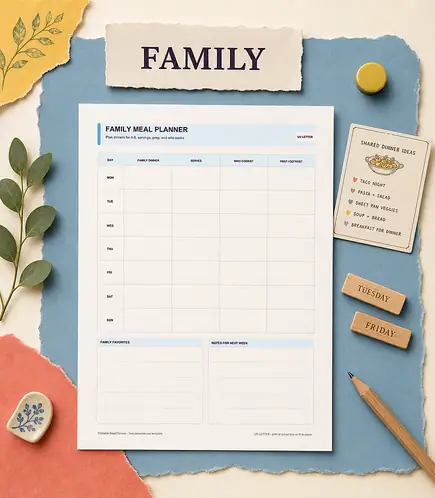
A busy family does not need more dinner ideas as much as it needs better coordination. Who will be home, who can cook, which evenings involve transport, and where leftovers fit are often more important than the recipe itself. A family plan should make those conditions visible and provide a shared answer without requiring everyone to eat the same amount at the same time.
The finished plan will show attendance, cooking ownership, meal effort, and fallback choices so that one person is not carrying every decision in memory. This guide turns that outcome into a repeatable paper workflow rather than a perfect menu that only works once. Start with the information you already have, make the few decisions that reduce the most friction, and leave visible room for the week to change.
Plan attendance before portions
Family size can change from night to night because of work, activities, custody schedules, guests, or older children eating elsewhere. Fixed recipe quantities create excess or shortage when attendance is assumed. Write who is expected for each dinner and translate that into a rough serving count. Keep flexible portions available when attendance is uncertain.
For example, Monday may need six servings, while Wednesday needs three plus one packed portion for someone returning late. On your planner, place the serving number beside the meal and mark any portion that must be held separately. Review that note at the end of the week so the next plan reflects what actually happened rather than what you hoped would happen.
- Include late arrivals and meals eaten away.
- Adjust for different appetites rather than head count alone.
- Use flexible sides when attendance is uncertain.
Assign ownership, not just a menu
A written meal can still fail when nobody knows who will shop, thaw, cook, or clean. Ownership turns the plan into shared work. Assign the primary cook or assembler and one advance task where useful. Keep assignments realistic for skill, age, availability, and household agreements.
For example, one person can move soup from freezer to refrigerator, another can cook, and a child can set out safe, age-appropriate table items. On your planner, write names or initials in the who-cooks and prep fields. Review that note at the end of the week so the next plan reflects what actually happened rather than what you hoped would happen.
- Confirm the person knows about the assignment.
- Separate cooking from small helper tasks.
- Avoid assigning responsibility to someone absent during prep time.
Use modular dinners on fragmented evenings
Meals that must be served at one exact moment are difficult when people arrive in waves. Modular food can be assembled or reheated without losing the whole dinner. Choose bowls, wraps, baked potatoes, soups, pasta components, or snack plates for split evenings. Store components separately and provide clear reheating notes.
For example, a rice-bowl setup can serve one person before practice and the rest of the family later without remaking the meal. On your planner, mark serve in waves beside dinners that need flexible timing. Review that note at the end of the week so the next plan reflects what actually happened rather than what you hoped would happen.
- Keep perishable components stored appropriately.
- Choose formats that remain appealing after reheating.
- Label portions reserved for late arrivals.
Schedule one family-choice meal
Participation increases the chance that the plan reflects real preferences and reduces the burden on the planner. It also creates a predictable place for favorites. Invite household members to suggest one meal within the week's time and budget limits. Rotate who chooses rather than collecting seven competing requests.
For example, one child may choose tacos this week while another chooses a pasta dinner next week. On your planner, write the chooser's name beside the selected meal and note any practical adaptation. Review that note at the end of the week so the next plan reflects what actually happened rather than what you hoped would happen.
- Set boundaries before asking for ideas.
- Keep the choice compatible with the schedule.
- Use deconstructed serving when preferences differ.
Protect the hardest night with two backups
Busy families often know which evening is most vulnerable. Repeating the same optimistic plan there creates a predictable last-minute problem. Place a genuinely quick dinner on that night and keep a second pantry or freezer backup available. Decide who can activate the backup without waiting for permission.
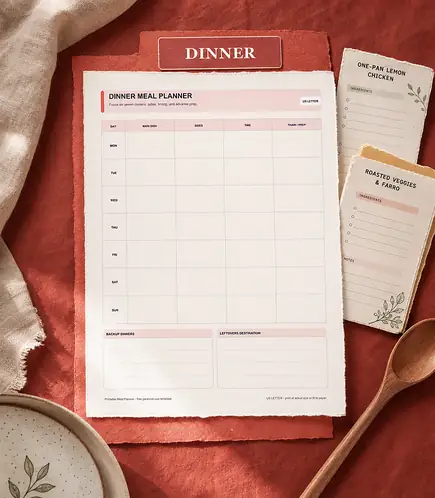
For example, a reheatable pasta bake can be planned, with sandwiches or freezer soup available if the day runs later than expected. On your planner, write Plan B beside the difficult evening and confirm its ingredients. Review that note at the end of the week so the next plan reflects what actually happened rather than what you hoped would happen.
- Choose a backup everyone can locate.
- Keep instructions short enough for another cook.
- Replace backup ingredients after use.
Hold a five-minute family review
Schedule patterns and preferences change, so the planner needs feedback beyond whether plates were empty. A short review improves coordination without turning dinner into an evaluation. Ask which meal fit the schedule, which created avoidable work, and what should repeat. Focus on logistics and practical preferences rather than judging intake.
For example, the family may learn that Thursday needs modular food or that a favorite meal is too demanding for a school night. On your planner, keep one repeat and one scheduling change for the next planner. Review that note at the end of the week so the next plan reflects what actually happened rather than what you hoped would happen.
- Invite brief input from everyone affected.
- Separate timing issues from food preferences.
- Change one recurring problem at a time.
Make the plan work for you
Family planning succeeds when the page carries the coordination that one person was previously expected to remember. Attendance, ownership, flexible serving, and a visible backup often matter more than adding another recipe. Begin with this one action: place the family calendar beside the meal planner, mark who is home for dinner each night, and identify the two evenings where coordination usually breaks down Keep the completed sheet where you will see it, make one adjustment after the week is over, and reuse the parts that genuinely saved time, money, or attention.