10 minute read
7-Day Healthy Family Meal Plan With Grocery List
A practical weekly meal plan for a family of four, including seven flexible dinners, prep notes, leftovers strategy, and a categorized grocery list.

A useful family meal plan has to do more than sound healthy. It must fit work and school schedules, use ingredients before they spoil, provide enough food for different appetites, and leave room for the unexpected. This seven-day plan is designed for a family of four and uses flexible meals that can be adjusted for younger children, larger portions, or dietary preferences.
The plan deliberately repeats several ingredients so the grocery list stays manageable. Vegetables, cooked grains, beans, chicken, yogurt, tortillas, and a few sauces appear in different combinations throughout the week. The result is variety without buying a completely different pantry for every dinner.
Day 1: Sheet-pan chicken, potatoes, and vegetables
Begin with a meal that creates useful leftovers. Roast chicken thighs or breasts with potatoes, carrots, and broccoli on one or two sheet pans. Season one section simply for children who prefer mild flavors, then add herbs, paprika, or lemon to the remaining portions.
Cook two extra pieces of chicken for tomorrow's wraps. While the tray is in the oven, wash the lettuce and slice cucumbers for Day 2. This is the longest preparation session of the week, but most of the cooking time is unattended.
Day 2: Chicken and crunchy vegetable wraps
Slice the leftover chicken and serve it with tortillas, lettuce, cucumber, grated carrots, cheese, and yogurt sauce. Put the ingredients on the table separately so each person can assemble a wrap that suits their appetite. Beans or hummus can replace the chicken for a vegetarian option.
Serve fruit or any remaining roasted vegetables on the side. Wrap filling can also become next day's lunch, so store extra ingredients separately rather than assembling all the wraps in advance.
Day 3: Tomato and lentil pasta
Cook pasta and combine it with tomato sauce, red lentils, spinach, and a small amount of grated cheese. Red lentils soften into the sauce and add protein without requiring a second pan. If your family is new to lentils, begin with a smaller quantity and increase it in future weeks.
Make enough for one or two lunch portions. Add a simple salad or frozen peas if more vegetables are needed. The sauce can be prepared earlier in the day and reheated while the pasta cooks.
Day 4: Build-your-own rice bowls
Use brown or white rice as the base and offer black beans, corn, chopped tomatoes, avocado, grated cheese, salsa, and leftover vegetables. This meal works well on a busy evening because most ingredients only need to be warmed or chopped.
Cook extra rice for Day 6. Cool it quickly and refrigerate it in a shallow container. Rice bowls are also a good place to use small amounts of vegetables or sauces that would otherwise remain in the refrigerator.
Day 5: Homemade pizza and salad
Use prepared pizza dough, flatbreads, or pita bread to keep Friday dinner simple. Offer tomato sauce, cheese, mushrooms, peppers, spinach, and any suitable leftovers as toppings. Small individual bases let children participate without turning the meal into a complicated cooking project.
Serve a green salad, cucumber sticks, or fruit alongside the pizza. Freeze any unused dough or grated cheese if it will not be used during the weekend.
Day 6: Vegetable egg fried rice
Use the cooked rice from Day 4 with eggs, frozen peas, carrots, green onions, and any remaining vegetables. Cook the vegetables first, move them to one side of the pan, scramble the eggs, and then add the cold rice and a small amount of soy sauce.
For additional protein, add edamame, tofu, or leftover chicken. Because the rice is already cooked, dinner can be ready in about twenty minutes. This meal is especially useful for clearing several small containers from the refrigerator.
Day 7: Flexible soup and toast night
Finish the week with a soup that adapts to what remains. Start with onion, carrots, broth, canned tomatoes, and beans or lentils. Add leftover vegetables, spinach, pasta, or rice as needed. Serve with toast, grilled cheese, or a simple sandwich.
Freeze extra soup in meal-sized portions. The freezer portion becomes an easy dinner during a future week and helps the planning habit create benefits beyond the current seven days.
Family-of-four grocery list
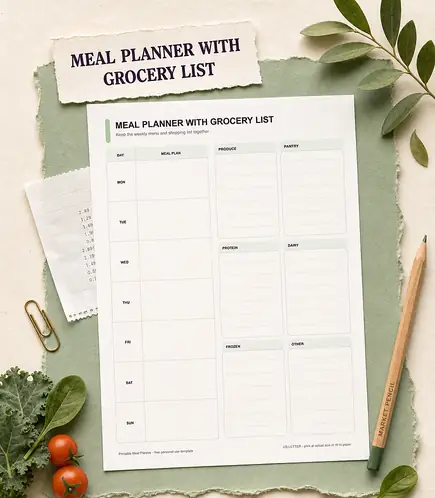
Adjust quantities for ages and appetites, and check your pantry before shopping. The following list covers the main ingredients used across the seven dinners. Breakfasts, lunches, beverages, and household staples should be added separately.
- Produce: potatoes, carrots, broccoli, lettuce, cucumbers, spinach, tomatoes, peppers, avocado, onions, green onions, lemons, and fruit.
- Protein: chicken, eggs, two cans of beans, red lentils, and optional tofu or edamame.
- Dairy: grated cheese and plain yogurt.
- Pantry: pasta, rice, tortillas, tomato sauce, canned tomatoes, broth, corn, salsa, soy sauce, and seasonings.
- Bakery and frozen: pizza dough or flatbreads, bread, frozen peas, and optional frozen mixed vegetables.
Make the plan work for your household
Portion sizes are intentionally flexible. Teenagers may need extra rice, pasta, or protein, while younger children may eat smaller portions. Add one easy side such as fruit, bread, yogurt, or raw vegetables when a meal needs more volume.
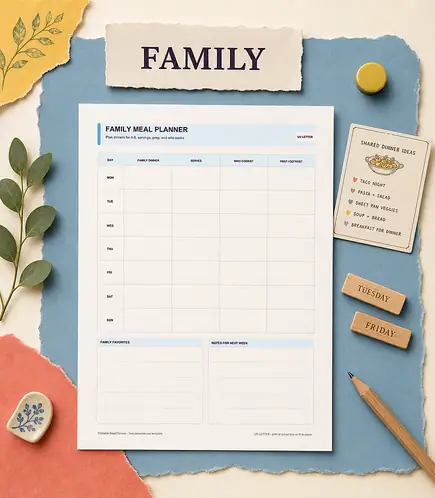
Write the dinners on the family meal planner and add who will cook, which ingredients need thawing, and where leftovers will be used. That small amount of coordination prevents the plan from depending on one person remembering every detail.
Make the plan work for you
This weekly meal plan for a family of four is a starting structure, not a strict menu. Swap days, repeat a favorite, or replace an ingredient with something already available. The strongest plan is the one that reduces waste and helps your household eat together more often.