8 minute read
How to Plan Leftovers and Reduce Weekly Food Waste
Reduce weekly food waste by inventorying cooked food, assigning next uses, planning rescue meals, freezing early, and reviewing buying patterns.

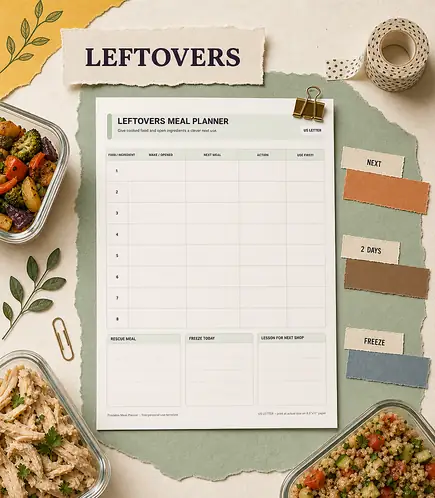
Leftovers become useful when they are treated as ingredients with a schedule rather than containers with good intentions. The most effective system records what exists, gives each item a next use, places the oldest safe food where it can be seen, and freezes food before the household becomes tired of it. The goal is fewer forgotten decisions, not forced eating.
You will create a short cooked-food inventory, connect leftovers to specific meals, and learn which purchasing or portion habits cause recurring excess. This guide turns that outcome into a repeatable paper workflow rather than a perfect menu that only works once. Start with the information you already have, make the few decisions that reduce the most friction, and leave visible room for the week to change.
Name, date, and size every useful leftover
A container called leftovers provides no information about what it can become or whether it is enough for one lunch or a family dinner. Record the food, preparation or opening date when known, approximate portions, and any important storage note. Follow appropriate food-safety guidance rather than relying on memory.
For example, write roasted vegetables, two side portions, made Monday instead of vegetables. On your planner, keep the description short enough to match a physical label. Review that note at the end of the week so the next plan reflects what actually happened rather than what you hoped would happen.
- Include sauces and partial cooked components.
- Count portions realistically.
- Keep uncertain food separate from planned safe use.
Assign a next meal instead of a vague intention
Planning to use something later leaves the decision in the same uncertain state. A specific date and format makes the leftover visible during meal preparation. Connect each priority item to a lunch, dinner, snack, or freezer action. Avoid assigning more leftover food to one meal than the household can reasonably finish.
For example, Monday chicken can become Wednesday wraps, while extra rice can enter Tuesday lunch rather than competing for the same dinner. On your planner, write the destination on both the inventory and the weekly meal plan. Review that note at the end of the week so the next plan reflects what actually happened rather than what you hoped would happen.
- Keep storage timing realistic.
- Match portions to the planned audience.
- Freeze food with no near-term destination.
Transform components, not every complete meal
People often resist eating an identical dinner repeatedly but welcome a familiar component in a different format. Transformation increases variety without discarding useful food. Change texture, serving form, or flavor while keeping the safe reusable component. Add one fresh element when it makes the second meal more appealing.
For example, roasted vegetables can become soup, cooked grains can become a skillet meal, and shredded meat can fill tacos or sandwiches. On your planner, name the transformed meal rather than writing leftovers night. Review that note at the end of the week so the next plan reflects what actually happened rather than what you hoped would happen.
- Use sauces and garnishes to create contrast.
- Avoid repeatedly reheating the entire batch.
- Follow safe cooling and reheating practices.
Create one weekly rescue meal
Small portions may not justify separate meals but can combine into a flexible dinner. A rescue meal gives several items one scheduled opportunity. Reserve a low-pressure slot for a frittata, soup, grain bowl, wrap bar, snack plate, or buffet of compatible leftovers. Keep a backup available in case the amounts are insufficient.
For example, several vegetables, a small grain portion, eggs, and a sauce can become bowls or a skillet dinner. On your planner, list the likely components and the backup before the rescue night arrives. Review that note at the end of the week so the next plan reflects what actually happened rather than what you hoped would happen.
- Combine foods that are compatible and safe.
- Add a simple fresh or pantry component if needed.
- Do not save unsuitable food merely to fill the rescue meal.
Freeze early, not after repeated postponement
Freezing is most useful while food is still in good condition and before the household has rejected it several times. Delayed freezing transfers an old problem into storage. Decide during cleanup whether extra portions have a realistic near-term use. Package and label suitable food promptly when the answer is no.
For example, freeze half a large soup immediately instead of planning soup for three consecutive lunches and changing your mind. On your planner, move the item from the leftovers list to the freezer inventory with a date and portion count. Review that note at the end of the week so the next plan reflects what actually happened rather than what you hoped would happen.
- Use freezer-suitable containers and portions.
- Label the item before it becomes unrecognizable.
- Schedule a future use when possible.
Trace recurring waste back to the purchase
Repeated excess often begins with package size, unrealistic plans, or household preferences rather than a failure to rescue one item. Review creates a more durable solution. At week end, note what remained, why it remained, and what upstream change would help. Adjust portions, meal frequency, or package choice rather than simply trying harder to use it.
For example, if herbs repeatedly spoil after one recipe, choose another flavor plan, freeze suitable portions, or buy a smaller amount. On your planner, write one buy less, cook less, or plan earlier lesson beside the next grocery list. Review that note at the end of the week so the next plan reflects what actually happened rather than what you hoped would happen.
- Separate unexpected schedule changes from predictable excess.
- Notice food the household consistently avoids.
- Change one purchasing habit at a time.
Make the plan work for you
Reducing food waste is a chain of small decisions: identify, assign, transform, freeze, and learn. A visible next use matters more than a container placed in the refrigerator with no destination. Begin with this one action: open the refrigerator before planning new meals, list cooked food and open ingredients, and place the items that should be considered first at the top of the page Keep the completed sheet where you will see it, make one adjustment after the week is over, and reuse the parts that genuinely saved time, money, or attention.