8 minute read
Budget Meal Planning Without Eating the Same Thing Daily
Plan affordable meals with cost anchors, ingredient overlap, flexible proteins, planned leftovers, price substitutions, and a weekly spending review.

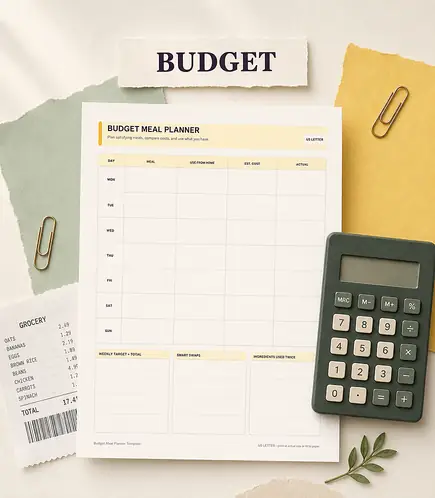
Budget meal planning is not a competition to produce the lowest possible cost per plate. A sustainable plan balances spending with time, enjoyment, nutrition needs, available equipment, and food that will actually be eaten. The strongest savings usually come from using what is already available, reducing one-use ingredients, planning portions, and adapting to prices without abandoning the whole menu.
You will create a varied week with a realistic spending target, several shared ingredients, flexible substitutions, and a way to compare planned cost with what happened. This guide turns that outcome into a repeatable paper workflow rather than a perfect menu that only works once. Start with the information you already have, make the few decisions that reduce the most friction, and leave visible room for the week to change.
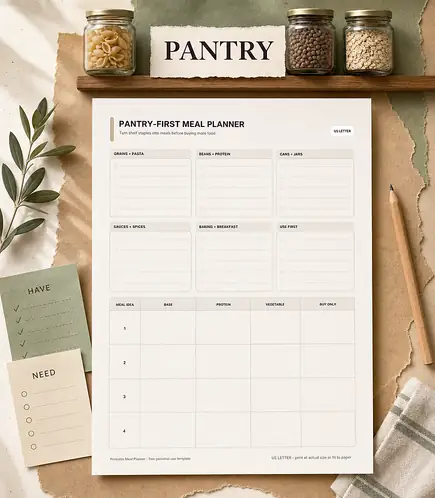
Choose two cost anchors from food already available
The least expensive useful ingredient is often one already purchased. Beginning with existing food reduces the list before discounts or recipe searches enter the process. Select two substantial ingredients or prepared components that can anchor several meals. Confirm quantity and condition, then build around them rather than forcing them into unrelated recipes.
For example, a bag of lentils can support soup and a pasta sauce, while frozen chicken can appear in a tray bake and wraps. On your planner, write the anchor beside every meal that uses it and subtract its cost from the new shopping estimate. Review that note at the end of the week so the next plan reflects what actually happened rather than what you hoped would happen.
- Prioritize open or older usable food.
- Confirm the anchor provides enough portions.
- Avoid opening several similar staples at once.
Create variety through format and flavor
Ingredient overlap saves money, but identical meals create fatigue and make planned food less likely to be eaten. Variety can come from preparation and seasoning rather than a new ingredient list. Reuse a base ingredient in different forms, textures, or cuisines while keeping supporting purchases versatile. Plan sauces and seasonings before buying specialty products.
For example, beans can become tacos, soup, and grain bowls, while cabbage can be slaw, a roasted side, or part of a stir-fry. On your planner, note the format beside repeated ingredients so the week does not read like one meal copied several times. Review that note at the end of the week so the next plan reflects what actually happened rather than what you hoped would happen.
- Vary cooking methods.
- Use condiments already available.
- Buy specialty flavor items only with several planned uses.
Balance low-cost meals with convenience
A cheap meal that requires hours of work may be replaced by an unplanned purchase on a difficult night. Convenience has budget value when it protects the plan. Place lower-cost cooking projects on available days and include several quick meals using frozen, canned, or partially prepared ingredients. Compare total cost with the realistic alternative.
For example, a homemade bean soup may suit Sunday, while frozen vegetables and dumplings may cost more per serving but prevent Thursday takeout. On your planner, label meals low cost, quick, or both so one goal does not overload the week. Review that note at the end of the week so the next plan reflects what actually happened rather than what you hoped would happen.
- Include cooking energy and cleanup.
- Keep one acceptable convenience backup.
- Avoid scheduling every low-cost recipe in the same week.
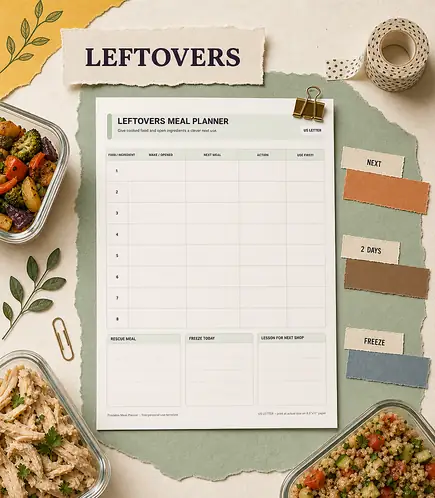
Plan portions and leftovers before cooking
Oversized cooking does not save money when extra food is discarded. Portion planning connects the amount cooked to lunches, second dinners, or freezer needs. Estimate who will eat each meal and assign any extra portion before choosing recipe quantity. Reduce the batch when the household is unlikely to welcome repetition.
For example, a recipe serving six can feed four at dinner and two planned lunches, while a larger batch may need immediate freezer portions. On your planner, write the destination and portion count beside the meal. Review that note at the end of the week so the next plan reflects what actually happened rather than what you hoped would happen.
- Consider different household appetites.
- Use smaller batches for unfamiliar recipes.
- Freeze planned extras before serving when helpful.
Attach price-based substitutions
Prices change, and a budget plan needs alternatives that preserve meals. Without substitutions, one expensive item can destabilize several days. Identify the flexible protein, produce, and grain choices in the plan. Write one equivalent option that uses the same preparation and supporting ingredients.
For example, a grain bowl can use beans instead of a costly protein, or seasonal vegetables instead of the produce originally pictured in a recipe. On your planner, place the preferred and substitute item on the same grocery-list line. Review that note at the end of the week so the next plan reflects what actually happened rather than what you hoped would happen.
- Compare usable quantity, not only package price.
- Respect dietary and allergy needs.
- Buy only one option unless both have planned uses.
Compare planned, purchased, and wasted cost
A receipt alone does not show whether a budget plan worked. Pantry restocking, food carried into next week, and discarded ingredients affect the interpretation. Record planned and actual grocery totals, then note unusual stock-up purchases and food left for future weeks. Identify one change with recurring value.
For example, a higher bill may still be reasonable if it includes a month's supply of a staple, while a lower bill can hide several unused fresh purchases. On your planner, write one successful saving and one adjustment for the next plan. Review that note at the end of the week so the next plan reflects what actually happened rather than what you hoped would happen.
- Separate household items from food when useful.
- Notice ingredients repeatedly wasted.
- Keep budget targets realistic enough to repeat.
Make the plan work for you
The most durable budget plan buys fewer unassigned ingredients, uses overlap without monotony, and protects busy nights from expensive last-minute choices. Savings should make the system easier to sustain, not harder to live with. Begin with this one action: set a grocery target that reflects the household and existing food, then list the pantry, freezer, and use-first ingredients that can support complete meals Keep the completed sheet where you will see it, make one adjustment after the week is over, and reuse the parts that genuinely saved time, money, or attention.