8 minute read
Pantry Meal Planning: Turn Shelf Staples Into Real Meals
Use a pantry inventory and flexible meal formulas to turn grains, beans, cans, sauces, and open packages into useful meals before shopping.

A full pantry does not automatically create an easy dinner. Food becomes useful when ingredients are visible, combined into workable meal formulas, and connected to the small number of fresh items that complete them. Pantry meal planning is therefore less about stockpiling and more about translating what you own into specific meals before another shopping trip.
You will finish with an accurate use-first inventory, several complete meal combinations, and a short shopping list containing only the ingredients that close real gaps. This guide turns that outcome into a repeatable paper workflow rather than a perfect menu that only works once. Start with the information you already have, make the few decisions that reduce the most friction, and leave visible room for the week to change.
Inventory by usable category, not every label
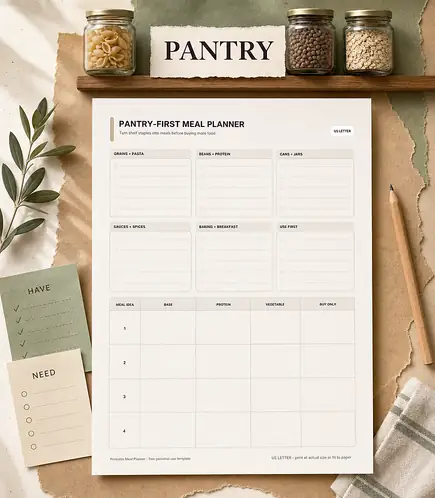
A detailed list of every package can take longer than the planning session and quickly becomes outdated. Categories show what kinds of meals are possible. List grains and pasta, beans and other proteins, canned vegetables, sauces, baking or breakfast staples, and use-first items. Add quantities only when supply is uncertain.
For example, two cans of chickpeas and several grains provide more planning information than recording every brand and package size. On your planner, place open and near-date food at the top of each category. Review that note at the end of the week so the next plan reflects what actually happened rather than what you hoped would happen.
- Check items hidden behind newer purchases.
- Separate ready-to-eat food from ingredients requiring cooking.
- Discard only according to condition and appropriate guidance.
Build meals with a four-part formula
Pantry ingredients often feel incomplete because they are viewed separately. A formula identifies the missing role without demanding a specific recipe. Combine a base, a protein or satisfying component, a vegetable, and a flavor element. The vegetable may be frozen or canned, and the flavor may be a sauce, spice blend, herb, or acid.
For example, rice, black beans, canned corn, and salsa form a bowl, while pasta, lentils, tomatoes, and dried herbs form a substantial sauce. On your planner, write each meal as four components and circle the role that is missing. Review that note at the end of the week so the next plan reflects what actually happened rather than what you hoped would happen.
- Use ingredients in compatible forms.
- Include texture or contrast when possible.
- Keep preparation effort appropriate to the day.
Match use-first items to the earliest meals
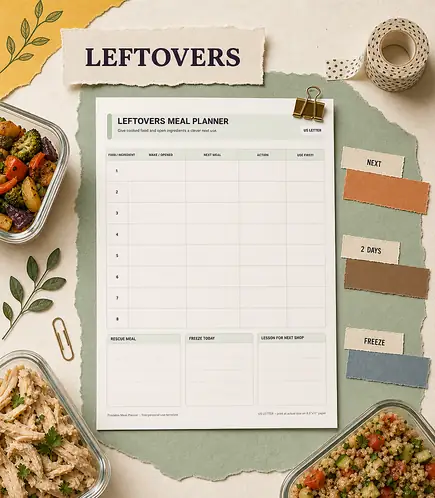
Open packages and older food lose value when a plan uses only the newest ingredients. Scheduling them early prevents the inventory from becoming a historical list. Choose the first two or three meals around use-first ingredients. Freeze suitable food when it cannot be used promptly and record that new location.
For example, an open jar of sauce may shape Monday pasta, while a partial bag of tortillas can support Tuesday quesadillas before a sealed grain is opened. On your planner, mark the planned day beside every high-priority pantry item. Review that note at the end of the week so the next plan reflects what actually happened rather than what you hoped would happen.
- Check refrigerator items that pair with pantry food.
- Avoid opening a duplicate before the first package is used.
- Move frozen transfers to the freezer inventory.
Add fresh ingredients only to complete meals
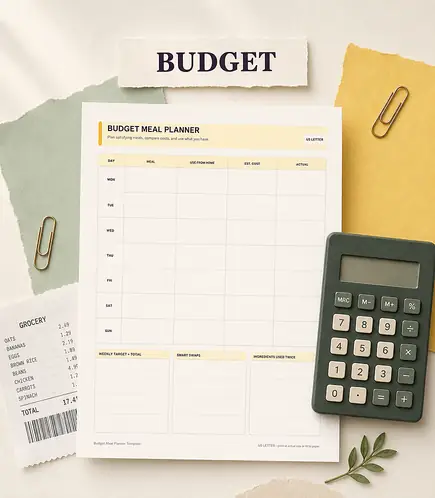
Pantry planning can still lead to a long grocery list if every meal receives several ideal additions. The goal is to buy the smallest set of fresh items that makes existing food useful. For each planned formula, identify the one or two missing components that materially improve the meal. Prefer ingredients that complete several pantry meals.
For example, a cabbage may provide slaw for bean tacos and vegetables for a noodle stir-fry, while one bunch of herbs may flavor soup and grain bowls. On your planner, write the meal destination beside each fresh purchase. Review that note at the end of the week so the next plan reflects what actually happened rather than what you hoped would happen.
- Choose durable produce for longer planning periods.
- Avoid specialty items with only one optional use.
- Check freezer vegetables before buying more.
Create a dependable pantry backup shelf
Not every pantry item needs to enter the immediate plan. A small set of stable backup meals provides resilience without turning the entire cupboard into emergency stock. Designate ingredients for two or three acceptable low-effort meals and keep those combinations together or clearly listed. Replace the ingredients after use.
For example, soup and crackers, pasta with sauce, or beans with tortillas can function as backups when the planned dinner becomes unrealistic. On your planner, list the complete backup combinations rather than writing miscellaneous staples. Review that note at the end of the week so the next plan reflects what actually happened rather than what you hoped would happen.
- Choose food the household willingly eats.
- Include any essential preparation ingredient.
- Rotate backup food into ordinary meals before quality declines.
Use the next shopping trip to correct the pantry
Repeated unused items reveal a mismatch between buying habits and actual meals. The inventory should influence what is not purchased as much as what is purchased. After the pantry-focused week, note what remained untouched, what completed several meals, and which quantity was unrealistic. Adjust future staple levels accordingly.
For example, if one grain is consistently ignored while canned tomatoes support several dinners, reduce the first and maintain a practical amount of the second. On your planner, keep a buy less, keep stocked, and try next time note near the pantry list. Review that note at the end of the week so the next plan reflects what actually happened rather than what you hoped would happen.
- Do not replenish an item only because it was traditionally stocked.
- Notice package sizes that create recurring excess.
- Retain versatile staples that repeatedly solve real meals.
Make the plan work for you
Pantry-first planning works when inventory leads to meal combinations and only then to shopping. The useful question is not what food is present, but which complete meals that food can support this week. Begin with this one action: remove or look behind the front row of pantry items, list open packages and approaching dates first, and choose three ingredients that should influence the next meal plan Keep the completed sheet where you will see it, make one adjustment after the week is over, and reuse the parts that genuinely saved time, money, or attention.