8 minute read
A Monthly Meal Planning System That Stays Flexible
Create a flexible monthly meal plan with anchors, weekly themes, freezer support, review points, and enough open space for changing schedules.

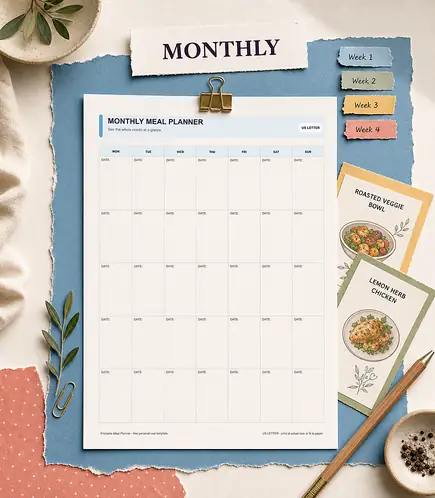
Monthly meal planning is most useful as a map, not a contract. The month view should reveal travel, demanding weeks, repeated favorites, freezer opportunities, and the days that do not need a detailed menu yet. Planning in layers keeps the calendar helpful while preserving the freedom to react to weather, prices, invitations, and energy.
A good monthly plan gives every week a direction, places demanding meals where they fit, and reduces blank-page planning without pretending that thirty dinners can be predicted perfectly. This guide turns that outcome into a repeatable paper workflow rather than a perfect menu that only works once. Start with the information you already have, make the few decisions that reduce the most friction, and leave visible room for the week to change.
Place fixed events and non-cooking days first
Monthly calendars create a false impression that every box needs a homemade meal. Events, travel, social meals, and rest days reduce the number of actual cooking decisions. Transfer the relevant calendar commitments before adding food. Mark takeout traditions, community meals, and likely leftovers nights as clearly as planned recipes.
For example, a birthday dinner, two travel nights, and a Friday pizza routine may remove four planning decisions from the month immediately. On your planner, use a simple label such as away, provided, flexible, or leftovers rather than leaving those days ambiguous. Review that note at the end of the week so the next plan reflects what actually happened rather than what you hoped would happen.
- Include recurring monthly commitments.
- Mark weeks with unusually high workload.
- Avoid assigning cooking projects to travel-return nights.
Choose weekly anchors instead of thirty recipes
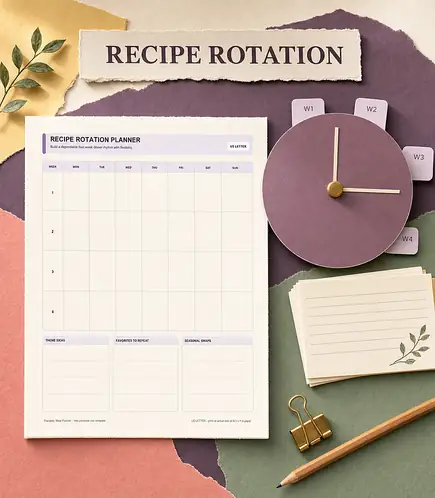
Anchors reduce decision fatigue while leaving the specific meal open. They are broad enough to adapt to price and season but concrete enough to start planning. Assign two or three recurring structures per week, such as soup, tacos, tray bake, pasta, grain bowls, or breakfast-for-dinner. Change the ingredients and flavors rather than the entire planning process.
For example, Tuesday can remain a taco-style meal while rotating beans, fish, chicken, roasted vegetables, and different salsas. On your planner, write the anchor lightly in the calendar and finalize the ingredients during the weekly review. Review that note at the end of the week so the next plan reflects what actually happened rather than what you hoped would happen.
- Choose anchors the household actually enjoys.
- Vary demanding and easy cooking methods.
- Keep at least one anchor suitable for pantry ingredients.
Distribute effort across the month
A monthly view makes clusters of difficult meals visible. Without an effort check, a busy week may accumulate several unfamiliar recipes and prep-heavy dinners. Label meals as quick, standard, or project-level. Move project meals toward lower-pressure days and place an easy dinner immediately after events or large cooking sessions.
For example, a homemade dumpling project may fit a quiet Saturday, while Monday after travel should use soup from the freezer or a reliable pantry meal. On your planner, add a small dot code for effort and scan each week for balance. Review that note at the end of the week so the next plan reflects what actually happened rather than what you hoped would happen.
- Limit project meals to realistic weekends.
- Follow large meals with planned leftovers.
- Avoid consecutive nights requiring full cleanup.
Plan freezer deposits and withdrawals
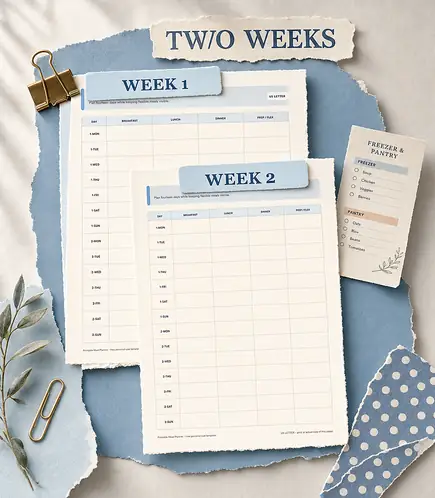
The freezer can transfer effort from a calm week to a difficult one. Monthly planning makes that exchange intentional instead of accidental. Choose one or two meals early in the month that can create extra portions and assign those portions to specific later dates. Confirm space and containers before doubling recipes.
For example, freeze half of a casserole during Week 1 for a late meeting in Week 3, or save soup portions for the return from a weekend trip. On your planner, write both the freeze date and planned use date so the meal does not disappear from view. Review that note at the end of the week so the next plan reflects what actually happened rather than what you hoped would happen.
- Use freezer-friendly meals the household likes.
- Label portions before they become unidentifiable.
- Leave one backup portion unassigned when possible.
Use weekly review points to add detail
Price, weather, produce quality, and appetite are clearer one week ahead than one month ahead. A layered plan protects those near-term decisions. Schedule a short review before each grocery trip. Confirm the anchors, select actual ingredients, check inventory, and move any meals affected by new commitments.
For example, a planned soup anchor can become tomato-lentil soup in cool weather or a lighter bean salad when the week turns warm. On your planner, use pen for fixed commitments and pencil for meals that remain adaptable. Review that note at the end of the week so the next plan reflects what actually happened rather than what you hoped would happen.
- Review before writing the grocery list.
- Check freezer and use-first produce.
- Preserve open days rather than filling them automatically.
Build next month from evidence
The calendar becomes more valuable when it records what happened. Completed plans reveal realistic cooking frequency, useful anchors, and weeks that need more support. At month end, mark meals worth repeating, unused ideas, and schedule patterns that affected food. Transfer only the strongest insights to the next page.
For example, you may learn that the final week consistently needs freezer meals or that one weekly theme creates leftovers nobody wants. On your planner, keep a short repeat, revise, and retire list beside the next monthly plan. Review that note at the end of the week so the next plan reflects what actually happened rather than what you hoped would happen.
- Count meals that moved rather than judging them.
- Save successful ingredient combinations.
- Remove recurring plans that create unnecessary work.
Make the plan work for you
The best monthly system holds the shape of the month while leaving the details close to the week where they belong. Use fixed events, flexible anchors, effort balance, and freezer exchanges to create structure without rigidity. Begin with this one action: mark travel, celebrations, late workdays, and meals already provided, then choose only the recurring anchors that you know the household will use Keep the completed sheet where you will see it, make one adjustment after the week is over, and reuse the parts that genuinely saved time, money, or attention.