9 minute read
Meal Prep 101: Save Five Hours Every Sunday
A beginner-friendly meal-prep routine that focuses on high-value tasks, safe storage, flexible components, and a realistic two-hour Sunday workflow.

Meal prep for beginners should make the week easier, not turn Sunday into an unpaid restaurant shift. The most effective approach is to prepare flexible components and remove the tasks that usually slow you down after work. You do not need seven identical containers or every meal fully cooked.
This system uses a two-hour preparation window to save smaller blocks of time across the week. The exact savings depend on your household, but washing produce once, cooking staple ingredients in batches, and organizing the refrigerator can eliminate repeated setup, cleanup, and decision-making.
Choose the meals before choosing the prep tasks
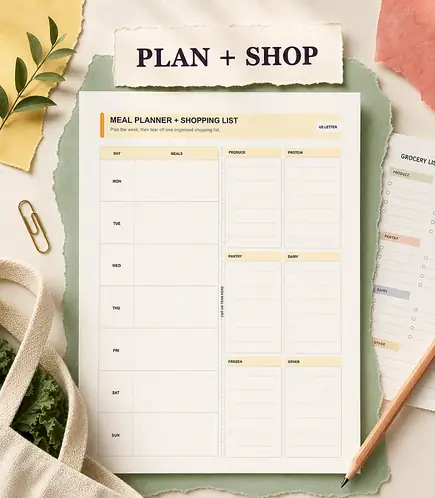
Begin with a weekly meal plan. Mark the three or four meals that require the most chopping, cooking, or assembly. Then identify which tasks can be completed safely in advance. Cooking rice, roasting vegetables, mixing a sauce, and portioning snacks are useful because they support several meals without forcing you to eat a fully assembled dish on a specific day.
Avoid preparing ingredients simply because they appear in a meal-prep video. If your family does not eat chopped celery or hard-boiled eggs, those containers will not create value. Every task should answer a practical question: what will make a weekday meal faster or easier?
Build a small component menu
Choose one or two proteins, one grain or starch, two vegetables, and one sauce or dressing. These components can become bowls, wraps, salads, side dishes, or quick skillet meals. For example, roasted chicken, chickpeas, rice, broccoli, peppers, and lemon-yogurt sauce can be combined in several ways without tasting like the same dinner every night.
Keep at least one component neutral. Strongly seasoning every ingredient in the same direction limits how it can be reused. A simply roasted vegetable can work with pasta, tacos, eggs, or a grain bowl after a different sauce is added.
Use an efficient preparation order
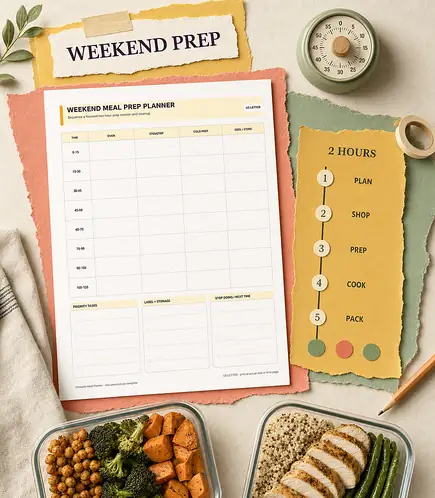
Start with the items that take the longest but require the least attention. Preheat the oven, begin a pot of grains, and place proteins in a marinade. While those cook, wash produce and prepare cold items. Finish with sauces, snacks, and portioning. This order reduces waiting and prevents the cutting board from being cleaned several times.
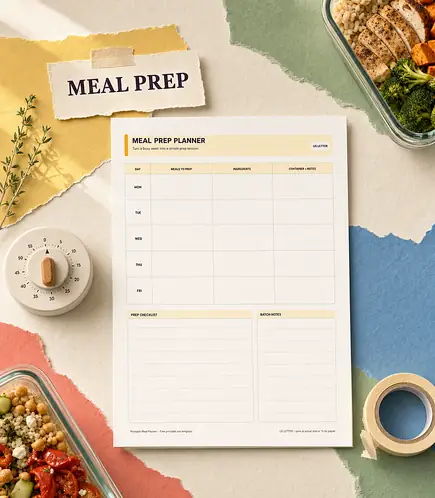
Use a written meal-prep planner so tasks stay visible. Group similar jobs together: wash all produce, chop all oven vegetables, prepare all lunch containers, and then clean the work surface. Batching the process saves more time than rushing each individual task.
- Minutes 0-15: preheat, start grains, and prepare protein.
- Minutes 15-45: wash and chop vegetables while hot items cook.
- Minutes 45-75: mix sauces, prepare snacks, and cool cooked food.
- Minutes 75-105: portion components and label containers.
- Minutes 105-120: clean the kitchen and update the weekly plan.
Prep ingredients to the right level
Not every ingredient should be fully cooked. Some vegetables keep better when washed but left whole. Salad greens should be dried thoroughly and stored with a clean towel. Cut onions or peppers may be useful for early-week meals, while delicate herbs are often better prepared closer to serving.
Use the shortest safe advance time as a guide. Schedule delicate ingredients for Monday or Tuesday and frozen or shelf-stable components for later in the week. If you are unsure how well something will hold, prepare a smaller amount the first time and take notes.
Cool, label, and store food safely
Allow hot food to stop steaming, then move it into shallow containers and refrigerate promptly. Avoid leaving cooked food at room temperature for an extended period. Keep the refrigerator cold, use clean containers, and follow local food-safety guidance for storage times and reheating temperatures.
Label containers with the item and intended day, especially when freezing. Put food for the first half of the week at eye level. Freeze components intended for later if they will not maintain good quality in the refrigerator. An organized shelf is part of meal prep because hidden food is rarely used on schedule.
Create grab-and-go breakfasts and lunches
Breakfast and lunch often produce the greatest time savings because they occur during rushed parts of the day. Prepare two breakfast choices rather than seven identical portions. Overnight oats, yogurt and fruit, egg muffins, toast kits, or smoothie packs can be alternated without adding much work.
For lunch, store wet and crisp ingredients separately when possible. Keep dressing away from salad greens, and add crunchy toppings before eating. A prepared grain, protein, vegetables, and sauce can become a bowl one day and a wrap the next.
Plan a midweek reset
A ten-minute reset on Wednesday is often more useful than extending Sunday prep for another hour. Review what remains, move a frozen component to the refrigerator, wash additional fruit, and decide where leftovers will be used. This prevents the second half of the week from becoming disconnected from the plan.
The reset is also a chance to change course. If plans shifted, freeze anything that will not be eaten and move a simpler meal forward. Meal prep should support flexibility rather than create pressure to follow an outdated schedule.
Measure the time you actually save
After one week, compare the preparation effort with the weekday benefits. Did lunches take less time? Was the kitchen cleaned fewer times? Did prepared vegetables get eaten? Remove tasks that did not help and keep the tasks that reduced friction.
A sustainable routine may be only sixty or ninety minutes. The goal is not to claim the largest preparation session. It is to find the smallest set of actions that makes several future meals easier. Over time, your meal-prep planner becomes a record of which tasks are worth repeating.
Make the plan work for you
For your first session, prepare one grain, one protein, two vegetables, one sauce, and three grab-and-go snacks. Label everything, schedule a short midweek reset, and leave some meals unassembled. This flexible approach delivers the benefits of meal prep without sacrificing your entire Sunday.