8 minute read
Meal Planning for Two With Different Schedules
Coordinate meals for two people with different schedules, portions, preferences, cook assignments, shared ingredients, and planned solo nights.

Two-person meal planning is not automatically simple. Work hours, appetite, dietary preferences, and social plans may align only part of the week. A useful plan identifies which meals are genuinely shared, where components can overlap, and when each person needs an independent option. Coordination matters more than forcing one menu across every day.
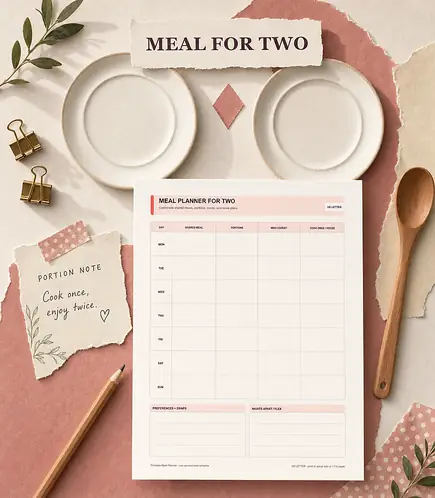
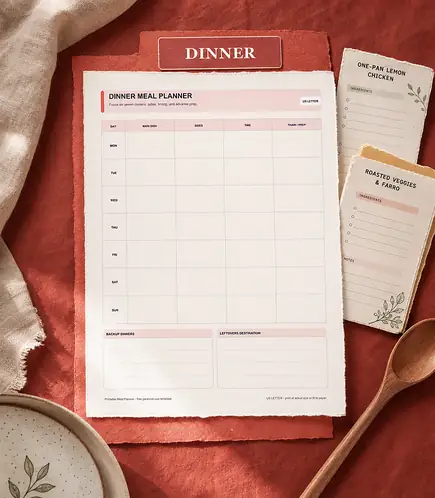
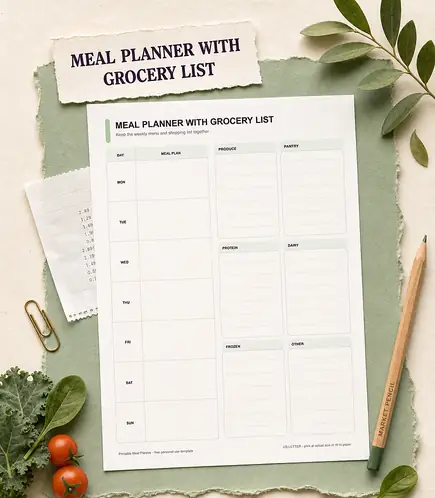
The page will show shared nights, solo nights, portions, ownership, and reuse plans so that both people can act without asking the other to remember every detail. This guide turns that outcome into a repeatable paper workflow rather than a perfect menu that only works once. Start with the information you already have, make the few decisions that reduce the most friction, and leave visible room for the week to change.
Separate shared meals from parallel meals
Assuming every dinner is shared leads to incorrect quantities and forgotten solo nights. Parallel meals can still use common ingredients without being served together. Label each evening shared, one person, staggered, or away. Decide whether a staggered meal can be reheated or should use separate components.
For example, a grain bowl may work at two different times, while a delicate dinner may be better scheduled for a truly shared night. On your planner, write attendance before the meal and adjust serving count accordingly. Review that note at the end of the week so the next plan reflects what actually happened rather than what you hoped would happen.
- Include work meals and social plans.
- Identify who needs packed food.
- Leave one flexible evening.
Agree on a small set of shared priorities
Two people can optimize for different things: cost, speed, variety, nutrition goals, or cooking enjoyment. Hidden priorities create friction during shopping and meal changes. Choose two or three priorities for the current week and accept that not every meal maximizes all of them. Revisit when the schedule changes.
For example, the week may prioritize quick dinners and budget, while a quieter week can include one new recipe. On your planner, write the priorities in the notes area so substitutions can follow them. Review that note at the end of the week so the next plan reflects what actually happened rather than what you hoped would happen.
- Keep priorities specific to the week.
- Acknowledge each person's non-negotiable needs.
- Avoid using the plan to police another person's eating.
Plan shared bases with individual finishes
Different preferences do not always require different cooking. A shared base can support separate toppings, sauces, sides, or portions. Choose meals that remain complete when customized at the final stage. Keep adaptations visible before shopping.
For example, tacos, pasta, bowls, baked potatoes, or tray meals can use common preparation and different final combinations. On your planner, write the base once and list each finish in a short preference box. Review that note at the end of the week so the next plan reflects what actually happened rather than what you hoped would happen.
- Keep customization smaller than a second meal.
- Respect allergy and dietary requirements.
- Store finishing ingredients separately.
Assign shopping, prep, cooking, and cleanup
Who cooks is only one part of meal work. The invisible tasks can remain uneven even when dinners appear to alternate. Assign or rotate planning, shopping, advance prep, cooking, and cleanup in a way that fits the household. Use initials on the planner rather than relying on assumptions.
For example, one person can shop and chop while the other cooks and handles cleanup, or responsibilities can change by day. On your planner, note the owner beside tasks that must happen before the meal. Review that note at the end of the week so the next plan reflects what actually happened rather than what you hoped would happen.
- Confirm assignments before the day arrives.
- Account for skill and schedule.
- Review fairness across the whole week.
Use extra portions intentionally
Recipes often serve more than two, which can be useful when extras have different destinations. Unplanned repetition is less useful. Choose whether extra servings become lunches, a second shared dinner, individual meals, or freezer portions. Scale down recipes when no destination fits.
For example, four portions can cover one dinner and two separate lunches, while six portions may require immediate freezing. On your planner, write names or dates beside every planned extra portion. Review that note at the end of the week so the next plan reflects what actually happened rather than what you hoped would happen.
- Match leftovers to each person's schedule.
- Avoid assigning the same lunch repeatedly without agreement.
- Package reserved portions during cleanup.
Review coordination instead of agreement
A plan can succeed even when people choose different foods, as long as needs were visible and work remained manageable. Total menu agreement is not the only measure. Review missed handoffs, inaccurate portions, useful shared ingredients, and nights where independent meals worked well. Improve the system rather than forcing more sameness.
For example, the lesson may be that Wednesday needs separate meals or that one shared base made two preferences easy to handle. On your planner, keep one coordination improvement for the next weekly plan. Review that note at the end of the week so the next plan reflects what actually happened rather than what you hoped would happen.
- Notice workload as well as food.
- Retain successful flexible meals.
- Discuss recurring conflicts outside the rushed cooking moment.
Make the plan work for you
Planning for two is a coordination system with shared and independent parts. Calendars, ownership, flexible bases, and named leftovers help two people cooperate without pretending their weeks are identical. Begin with this one action: compare calendars, circle the meals both people expect to share, and mark evenings when only one person needs food before choosing recipes Keep the completed sheet where you will see it, make one adjustment after the week is over, and reuse the parts that genuinely saved time, money, or attention.