8 minute read
Meal Planning for One Without Food Waste or Boredom
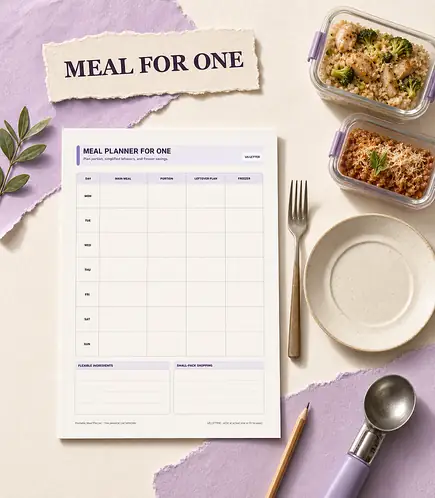
Plan meals for one with flexible ingredients, smaller batches, intentional leftovers, freezer portions, and grocery quantities that reduce repetition.

Cooking for one creates freedom, but standard package and recipe sizes can turn that freedom into repetitive leftovers or waste. A good solo plan does not shrink a family menu mechanically. It selects flexible ingredients, decides which meals deserve extra portions, freezes food before boredom begins, and leaves space for spontaneous changes that affect only one person.
The plan will support varied meals from a compact ingredient list while giving every extra portion a lunch, transformed meal, or freezer destination. This guide turns that outcome into a repeatable paper workflow rather than a perfect menu that only works once. Start with the information you already have, make the few decisions that reduce the most friction, and leave visible room for the week to change.
Count realistic cooking occasions
A solo plan can easily overestimate how often cooking will feel worthwhile. Meals out, social plans, work food, and spontaneous changes should reduce the plan before groceries are purchased. Mark fixed meals and choose the number of cooking sessions that matches the week. Use leftovers, assembled meals, and freezer portions between those sessions.
For example, three cooking nights may cover six dinners when each creates one intentional extra portion. On your planner, label cook, assemble, leftover, freezer, or out for every evening. Review that note at the end of the week so the next plan reflects what actually happened rather than what you hoped would happen.
- Avoid assigning a fresh recipe to every night.
- Leave one flexible slot.
- Plan lunches separately when they affect portions.
Buy ingredients with several possible roles
Single-use ingredients are harder to finish in a small household. Flexible food preserves choice while keeping the list compact. Choose produce, proteins, grains, and sauces that can move between several meal formats. Change preparation or seasoning to prevent repetition.
For example, spinach can enter eggs, pasta, and a bowl, while roasted vegetables can become a side or wrap filling. On your planner, write two planned uses beside each highly perishable purchase. Review that note at the end of the week so the next plan reflects what actually happened rather than what you hoped would happen.
- Prefer loose or smaller quantities where practical.
- Check freezer-friendly options.
- Avoid buying a full package for one optional garnish.
Decide batch size before cooking
A recipe yield is not a requirement. Cooking the full amount without a destination can create several identical meals that lose appeal. Halve suitable recipes, choose a different pan size, or intentionally make full portions only when lunch or freezer use is defined. Keep food-safety and cooking requirements in mind.
For example, make two portions of a skillet meal for dinner and lunch, but freeze soup in several single servings. On your planner, write eat, lunch, or freeze beside the planned portion count. Review that note at the end of the week so the next plan reflects what actually happened rather than what you hoped would happen.
- Confirm scaled cooking times and pan sizes.
- Use smaller batches for unfamiliar recipes.
- Package freezer portions promptly.
Transform leftovers before they feel repetitive
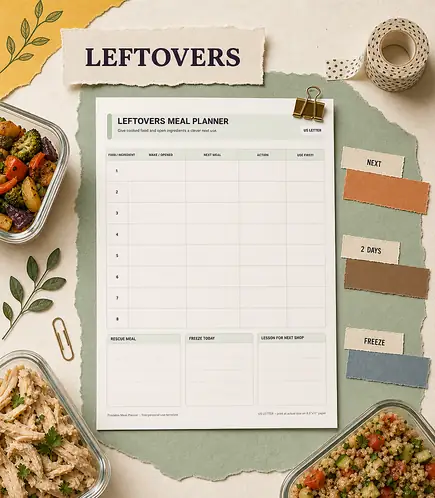
A component can be enjoyable several times when the final format changes. Waiting until the third identical plate makes transformation less appealing. Plan the second use while choosing the first meal. Reserve sauces, toppings, or a fresh component that changes texture and flavor.
For example, roasted chicken can become a grain bowl or sandwich, while cooked lentils can move from soup to a salad or sauce. On your planner, name the transformed meal instead of writing leftovers. Review that note at the end of the week so the next plan reflects what actually happened rather than what you hoped would happen.
- Store components separately when useful.
- Use leftovers within appropriate storage time.
- Freeze rather than over-scheduling repetition.
Create a single-serving freezer library
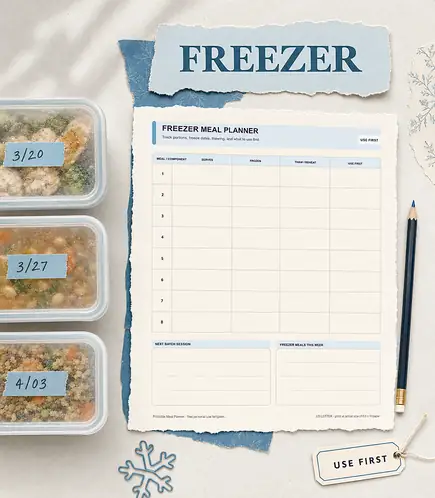
Freezer portions let one cooking session create future variety without requiring the same meal tomorrow. Portion size matters more in a solo system. Freeze suitable meals and components in one-meal containers with labels and reheating notes. Rotate them into weeks where cooking time is limited.
For example, individual soup, curry, cooked grain, or sauce portions can combine with fresh ingredients later. On your planner, add every new portion to the freezer inventory before storing it. Review that note at the end of the week so the next plan reflects what actually happened rather than what you hoped would happen.
- Use containers suited to one serving.
- Label the date and item clearly.
- Schedule withdrawals so the library rotates.
Review package size and enjoyment
Waste can come from buying too much, but it also comes from planning food you no longer want after several repetitions. Both quantity and enjoyment affect value. Note packages that were difficult to finish, meals worth freezing again, and ingredients that created useful variety. Adjust the next list rather than accepting standard sizes automatically.
For example, a larger bag may have a lower unit price but provide worse value when part of it is regularly discarded. On your planner, keep a buy smaller, freeze immediately, and repeat list. Review that note at the end of the week so the next plan reflects what actually happened rather than what you hoped would happen.
- Compare usable cost, not only unit cost.
- Notice when restaurant portions create extra meals.
- Preserve the flexibility that makes solo planning worthwhile.
Make the plan work for you
Meal planning for one works best as a network of flexible ingredients and intentional portions, not a miniature family menu. Cook fewer times, change the form of shared components, and let the freezer hold variety for future weeks. Begin with this one action: choose three ingredients you enjoy in several forms, then list the nights you actually expect to cook rather than automatically planning seven full dinners Keep the completed sheet where you will see it, make one adjustment after the week is over, and reuse the parts that genuinely saved time, money, or attention.