8 minute read
Meal Planning for Picky Eaters Without Separate Dinners
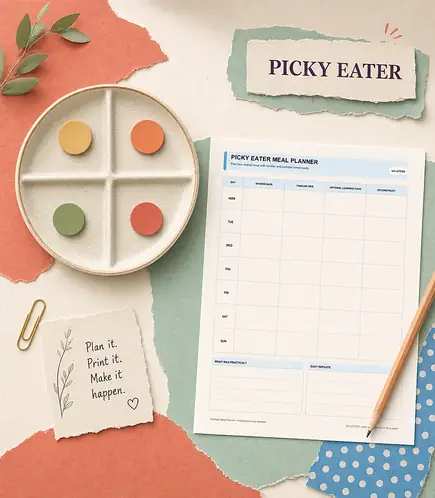
Plan one shared family meal with familiar components, optional learning foods, deconstructed serving, neutral language, and fewer separate dinners.

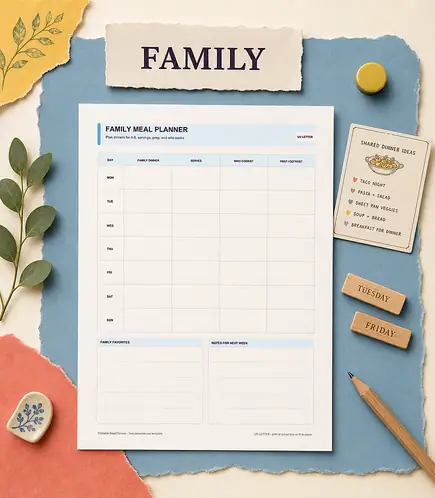
Meal planning for different comfort levels does not have to mean cooking several unrelated dinners. A shared base meal can be served in components, include at least one familiar option, and offer a small learning food without making acceptance the condition for a successful evening. This is a planning and coordination approach, not treatment for feeding or health concerns.
The weekly plan will show one family meal, the familiar component that protects participation, and practical ways to adapt presentation without building a second menu. This guide turns that outcome into a repeatable paper workflow rather than a perfect menu that only works once. Start with the information you already have, make the few decisions that reduce the most friction, and leave visible room for the week to change.
Plan a shared base instead of a separate plate
Completely separate meals increase work and can make family dinner harder to coordinate. A shared base preserves one cooking process while allowing flexible assembly. Choose meals with components that can be served together or separately, such as tacos, bowls, pasta with sauce on the side, soup with bread, or tray meals.
For example, a taco dinner can offer tortillas, beans or meat, cheese, vegetables, and salsa separately without becoming several different recipes. On your planner, write the shared base in the main column and list only essential adaptations. Review that note at the end of the week so the next plan reflects what actually happened rather than what you hoped would happen.
- Use meals that function when deconstructed.
- Avoid hiding an important ingredient unexpectedly.
- Keep adaptation work smaller than cooking another dinner.
Include one familiar component
A familiar food can make the meal setting more predictable without guaranteeing what anyone will eat. It is part of the shared offering rather than a reward. Identify a simple familiar side or component that fits the family meal. Rotate choices so the plan remains practical and varied.
For example, bread, rice, fruit, plain pasta, or a familiar vegetable may accompany the shared base depending on the household. On your planner, write the familiar component before shopping so it is available without last-minute negotiation. Review that note at the end of the week so the next plan reflects what actually happened rather than what you hoped would happen.
- Serve the familiar food to the table, not as a prize.
- Keep portions available without forcing intake.
- Use guidance appropriate to individual needs.
Offer learning foods in small, neutral ways
A large serving or emotionally loaded introduction can increase pressure. Planning a small optional exposure allows the household to prepare without making acceptance the goal. Choose one food or variation connected to the shared meal and offer a manageable amount. Use neutral descriptions of color, texture, temperature, or preparation.
For example, a small roasted carrot can sit beside familiar potatoes, or sauce can be available in a separate cup. On your planner, list the learning food as optional so the meal plan does not depend on it being eaten. Review that note at the end of the week so the next plan reflects what actually happened rather than what you hoped would happen.
- Avoid bargaining or requiring a bite.
- Repeat exposure only when appropriate for the family.
- Follow allergy and medical guidance.
Use deconstructed serving to reduce conflict
Mixed dishes can hide textures and remove control over combinations. Deconstruction can make the same cooked meal easier to understand. Before cooking, identify which ingredients can remain separate without creating extra pans or compromising the meal. Let people combine components at the table.
For example, serve pasta, sauce, cheese, and vegetables separately, or keep bowl toppings in small shared dishes. On your planner, write separate beside the components that should not be mixed in advance. Review that note at the end of the week so the next plan reflects what actually happened rather than what you hoped would happen.
- Keep the cooking process shared.
- Do not create an excessive number of tiny options.
- Allow preferred combinations without commentary.
Protect the adult workload
A plan that requires elaborate adaptations every night will not remain calm or sustainable. The household's cooking capacity is part of the feeding environment. Limit adaptations to presentation, one familiar side, or a simple uncooked alternative already available. Use leftovers and repeated components deliberately.
For example, plain portions can be removed before seasoning rather than cooking a second main dish from the beginning. On your planner, note the smallest workable adaptation and stop planning beyond it. Review that note at the end of the week so the next plan reflects what actually happened rather than what you hoped would happen.
- Repeat successful shared bases.
- Avoid promising unlimited replacements.
- Keep one neutral backup consistent with household guidance.
Review logistics, not bites
Counting bites or rating the eater can increase pressure and provides limited planning insight. Practical observations help the next meal without turning the page into surveillance. Note whether the serving format was manageable, the adaptation created too much work, or the schedule affected the meal. Seek qualified support for growth, nutrition, swallowing, allergy, or severe feeding concerns.
For example, the useful lesson may be that sauce on the side worked or that a late dinner made the entire evening difficult. On your planner, write one practical repeat or adjustment without recording a score. Review that note at the end of the week so the next plan reflects what actually happened rather than what you hoped would happen.
- Use neutral household language.
- Do not diagnose from a planner.
- Escalate genuine concerns to an appropriate professional.
Make the plan work for you
The planning goal is one workable family meal with room for different comfort levels, not a perfect plate. Shared bases, familiar components, and lower-pressure presentation can reduce separate cooking while respecting individual needs. Begin with this one action: list several shared base meals the family already tolerates, identify their separate components, and choose one familiar food that can accompany each Keep the completed sheet where you will see it, make one adjustment after the week is over, and reuse the parts that genuinely saved time, money, or attention.