8 minute read
Keto Meal Planning Basics for an Organized Week
Organize a keto meal plan with personal macro guidance, label checks, vegetables, prep tasks, portable backups, and a weekly review without guesswork.

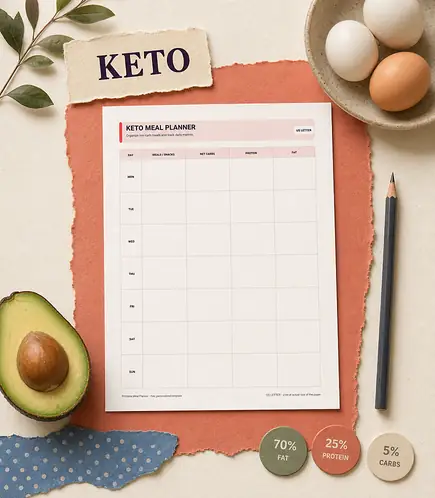
A keto planner can organize meals, labels, preparation, and personal macro notes, but it cannot determine whether the approach is appropriate for an individual. Needs, medications, medical conditions, and nutrition goals vary. This guide therefore focuses on planning mechanics for adults already following qualified guidance rather than prescribing targets or promising health outcomes.
The weekly page will connect meals with verified ingredients, appropriate personal notes, vegetables and fiber sources, preparation tasks, and dependable backups. This guide turns that outcome into a repeatable paper workflow rather than a perfect menu that only works once. Start with the information you already have, make the few decisions that reduce the most friction, and leave visible room for the week to change.
Keep personal targets separate from universal advice
Macro and energy needs vary, and a generic menu may conflict with medical or professional guidance. The planner should record, not prescribe. Use targets established for the individual and record only the measures that genuinely support planning. Seek qualified advice before significant dietary changes.
For example, one person may track net carbohydrate, protein, and fat notes while another needs a different system entirely. On your planner, write the source and date of the personal plan in the notes area. Review that note at the end of the week so the next plan reflects what actually happened rather than what you hoped would happen.
- Do not copy targets from another person.
- Review medication or medical concerns professionally.
- Avoid interpreting the planner as treatment.
Plan complete meals before calculating details
Starting with numbers can produce meals that are technically counted but impractical, repetitive, or missing vegetables and flavor. Food structure comes first. Choose the main meal, vegetables or other appropriate fiber sources, flavor, and preparation method, then add verified nutrition information according to the personal system.
For example, a tray meal may include an appropriate protein, non-starchy vegetables, seasoning, and a planned sauce. On your planner, write the meal components before filling the macro columns. Review that note at the end of the week so the next plan reflects what actually happened rather than what you hoped would happen.
- Include vegetables suited to the plan.
- Check portion assumptions.
- Use reliable nutrition information sources.
Verify labels and serving assumptions
Packaged foods and condiments can contain unexpected ingredients, and nutrition calculations change with serving size. Memory is not sufficient. Check current product labels and the amount actually planned. Record substitutions before shopping and recheck products when formulations change.
For example, sauces, dressings, processed meats, snack products, and dairy alternatives may require particular attention. On your planner, note the product or serving assumption beside meals where it materially affects the plan. Review that note at the end of the week so the next plan reflects what actually happened rather than what you hoped would happen.
- Read current labels.
- Match calculations to the planned portion.
- Respect allergy and other dietary requirements.
Prepare vegetables, proteins, and sauces flexibly
A week of identical containers is difficult to sustain. Components allow meals to change while keeping planning information visible. Prepare several appropriate vegetables, one or two proteins, and sauces separately. Assemble bowls, salads, tray meals, or skillet meals according to the day.
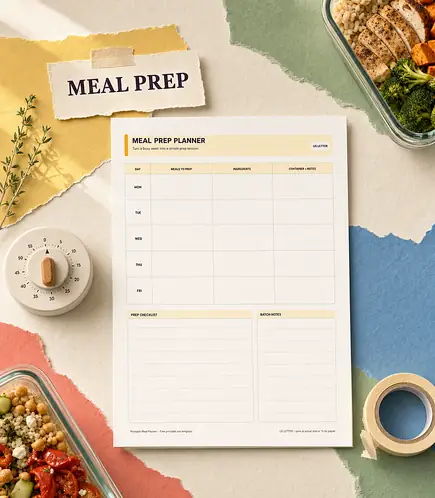
For example, roasted vegetables and a prepared protein can use different sauces or sides across several dinners. On your planner, list each component's destinations and storage plan. Review that note at the end of the week so the next plan reflects what actually happened rather than what you hoped would happen.
- Follow safe cooling and storage.
- Keep portions aligned with personal guidance.
- Freeze surplus before quality declines.
Create a verified portable backup
Unexpected travel or missed prep can force a rushed product choice. A known backup reduces label checking under pressure. Select an appropriate shelf-stable, chilled, or frozen option already verified for the individual's plan. Include everything necessary for the meal.
For example, a labeled freezer portion or a tested portable combination can cover a disrupted day. On your planner, write its location, preparation, and restock reminder. Review that note at the end of the week so the next plan reflects what actually happened rather than what you hoped would happen.
- Confirm storage requirements.
- Recheck labels when replacing it.
- Choose a backup you will actually use.
Review tolerability, variety, and professional guidance
A planner cannot evaluate symptoms, laboratory results, medication interactions, or nutritional adequacy. Those concerns require qualified care. Use the completed week to record objective planning details and questions. Discuss relevant concerns with the appropriate clinician or dietitian.
For example, the page can show meal timing, product choices, and planned values without claiming why a person felt a certain way. On your planner, keep questions separate from conclusions and update the plan from professional advice. Review that note at the end of the week so the next plan reflects what actually happened rather than what you hoped would happen.
- Do not diagnose from the planner.
- Preserve objective details.
- Change targets only through appropriate guidance.
Make the plan work for you
A keto planner is most responsible when it organizes an existing individualized approach without pretending to create one. Build complete meals, verify labels, keep flexible components, and take health questions to qualified professionals. Begin with this one action: write the current individualized guidance and targets you are already using, then inventory appropriate food at home before selecting meals Keep the completed sheet where you will see it, make one adjustment after the week is over, and reuse the parts that genuinely saved time, money, or attention.