8 minute read
Dinner Planning for Beginners: Start With Seven Evenings
Start meal planning with dinner only using schedule-based choices, reliable meal formulas, leftovers, easy sides, and a realistic weekly review.

Planning every meal can overwhelm a beginner before the habit has any chance to help. Dinner is a better starting point because it often requires the most coordination, ingredients, and cleanup. A seven-evening plan can reduce the daily question without asking you to redesign breakfast, lunch, snacks, and weekends at the same time.
By focusing on dinner, you will create a manageable plan that matches evening energy, uses a few dependable formulas, and deliberately schedules leftovers and backup food. This guide turns that outcome into a repeatable paper workflow rather than a perfect menu that only works once. Start with the information you already have, make the few decisions that reduce the most friction, and leave visible room for the week to change.
Rate each evening by available energy
Time alone does not describe what a dinner requires. A free hour after a stressful day may support less cooking than thirty calm minutes on another evening. Label nights low, medium, or high capacity based on time, energy, transport, and who is available. Match demanding meals only to evenings with genuine capacity.
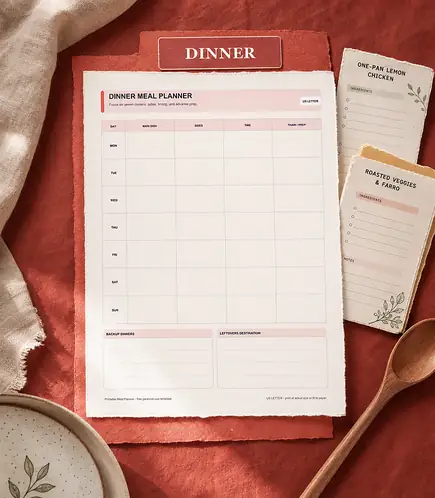
For example, a late commute may need a reheatable meal, while a quiet Saturday can hold a recipe that involves chopping and several pans. On your planner, write the capacity label before the meal so you can see mismatches immediately. Review that note at the end of the week so the next plan reflects what actually happened rather than what you hoped would happen.
- Consider cleanup as part of the meal's effort.
- Include activities and commute time.
- Do not assign every weekend night a cooking project.
Use meal formulas instead of endless recipes
Formulas provide structure while allowing ingredients to change. They reduce the mental work of searching and make substitutions easier. Choose several dependable formats such as sheet-pan meal, pasta plus vegetables, tacos, soup and bread, grain bowl, or eggs with sides. Select specific ingredients only after the format fits the evening.
For example, a grain bowl can use rice, roasted vegetables, beans, and sauce one week, then barley, greens, chicken, and herbs the next. On your planner, write the formula and the main ingredient so the plan remains clear but flexible. Review that note at the end of the week so the next plan reflects what actually happened rather than what you hoped would happen.
- Keep formulas broad enough for substitutions.
- Mix cooking methods across the week.
- Retain two formulas based mostly on pantry food.
Plan the side at the same time
Many dinner plans name only a main dish, leaving vegetables, starches, or extra preparation to be decided during the busiest moment. A simple side completes the plan. Choose one realistic side while assigning the dinner. Reuse side components across meals and allow ready-to-eat produce, bread, or frozen vegetables to count.
For example, roasted carrots can accompany chicken and later enter a grain bowl, while cut fruit may be the most practical side on a rushed night. On your planner, put the side in its own column instead of assuming it will appear automatically. Review that note at the end of the week so the next plan reflects what actually happened rather than what you hoped would happen.
- Choose sides with lower effort than the main dish.
- Use convenience ingredients when they protect the plan.
- Avoid buying a unique side for every dinner.
Create one cook-once connection
Intentional extra cooking can remove work later, but accidental excess often becomes waste. The difference is a named next use. Choose one dinner that produces an extra component or complete portion and schedule its next appearance. Change the format when that makes leftovers more appealing.
For example, extra roasted chicken can become wraps, or a doubled tomato sauce can support pasta now and a baked dish later. On your planner, note the destination beside the original meal and label the container after cooking. Review that note at the end of the week so the next plan reflects what actually happened rather than what you hoped would happen.
- Confirm the household wants the planned repeat.
- Use extras within suitable storage time.
- Freeze portions that will not be used promptly.
Keep two levels of backup dinner
One backup may not fit every disrupted evening. A ten-minute meal and a no-cook or heat-and-eat option cover different levels of capacity. Identify one fast pantry or freezer dinner and one truly minimal option. Replace them after use so the backup system remains available.
For example, pasta and frozen vegetables can be the fast cooked meal, while soup from the freezer or assembled sandwiches can be the minimal option. On your planner, list both backups in the notes area without tying them to a specific day. Review that note at the end of the week so the next plan reflects what actually happened rather than what you hoped would happen.
- Choose ingredients that store reliably.
- Make the backup acceptable, not punitive.
- Check backup inventory before each grocery trip.
Review only what dinner planning can teach
A beginner system should improve through a few concrete observations, not an elaborate scorecard. The goal is to understand realistic effort and useful repetition. At week end, mark the dinner that fit best, the dinner that required too much work, and the leftover connection that succeeded or failed. Adjust one variable next week.
For example, if Thursday repeatedly becomes takeout, that night may need a freezer meal rather than another optimistic recipe. On your planner, keep one best fit and one change note beside the next planner. Review that note at the end of the week so the next plan reflects what actually happened rather than what you hoped would happen.
- Separate schedule problems from recipe problems.
- Save meals that worked on difficult nights.
- Expand to other meals only when dinner planning feels stable.
Make the plan work for you
Dinner-only planning is not an incomplete version of meal planning; it is a focused system for the decision that often matters most. Build confidence with seven evenings before adding detail elsewhere. Begin with this one action: write the available cooking time beside each evening and choose the three nights where a clear dinner decision would provide the greatest relief Keep the completed sheet where you will see it, make one adjustment after the week is over, and reuse the parts that genuinely saved time, money, or attention.