8 minute read
Clean Eating Meal Planning Without Rigid Food Rules
Plan more whole-food meals without rigid rules by using flexible food groups, realistic convenience items, shared ingredients, backups, and neutral review.

The phrase clean eating can become unhelpful when it divides food into moral categories or demands perfection. A more practical planning approach simply makes whole foods, produce variety, useful proteins, grains or other bases, flavor, and hydration visible while preserving convenience, culture, budget, and individual needs. The goal is easier meals, not purity.
The weekly plan will support more minimally processed ingredients and produce variety without banning practical foods or turning the planner into a scorecard. This guide turns that outcome into a repeatable paper workflow rather than a perfect menu that only works once. Start with the information you already have, make the few decisions that reduce the most friction, and leave visible room for the week to change.
Define the goal in practical language
A vague goal to eat clean can create anxiety and inconsistent rules. A specific household goal is easier to plan and review. Choose behaviors such as cook vegetables four nights, prepare two lunches, use beans twice, or reduce unplanned takeout. Avoid moral labels for food.
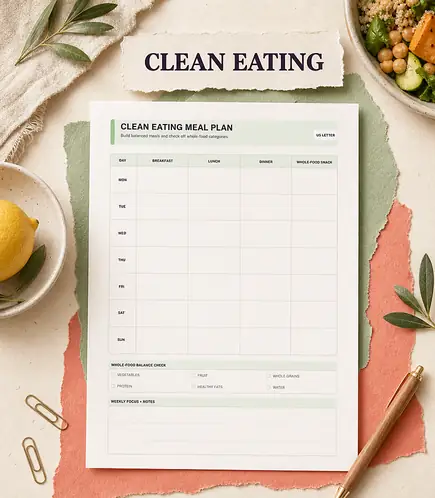
For example, the goal can be add a vegetable to weekday dinners rather than never eat processed food. On your planner, write one or two observable goals in the weekly focus area. Review that note at the end of the week so the next plan reflects what actually happened rather than what you hoped would happen.
- Keep goals achievable in the current week.
- Avoid all-or-nothing language.
- Use qualified guidance for medical nutrition needs.
Build meals with flexible food-group prompts
Prompts can reveal variety without prescribing one perfect plate. They should guide planning, not judge individual meals. Consider vegetables or fruit, a protein source, a grain or other satisfying base, and a flavorful fat or sauce according to household needs. Not every meal must display every prompt.
For example, a soup may combine vegetables, beans, grain, and broth, while another meal uses a different structure. On your planner, use checkboxes across the week and review the pattern rather than each square. Review that note at the end of the week so the next plan reflects what actually happened rather than what you hoped would happen.
- Adapt prompts to culture and dietary needs.
- Keep portions individualized.
- Do not turn checkboxes into moral scores.
Use convenience ingredients deliberately
Frozen vegetables, canned beans, prepared sauces, and other convenience foods can make home meals possible. Rejecting them automatically may increase workload and waste. Choose products that fit household preferences and guidance, then give them a named role in the plan. Compare the practical outcome with the likely alternative.
For example, frozen vegetables can complete a fast stir-fry, and canned beans can turn a grain bowl into dinner. On your planner, write the complete convenience-supported meal rather than hiding the shortcut. Review that note at the end of the week so the next plan reflects what actually happened rather than what you hoped would happen.
- Read labels where necessary.
- Keep a dependable freezer or pantry option.
- Use convenience to protect difficult nights.
Plan produce variety through overlap
Buying a different produce item for every meal creates cost and waste. Variety can happen across the week while ingredients overlap. Choose several produce items in different colors or forms and plan at least two uses for the most perishable. Mix fresh, frozen, canned, and dried options as appropriate.
For example, spinach can support eggs and pasta, while carrots can be roasted, added to soup, or packed raw. On your planner, mark both destinations beside perishable purchases. Review that note at the end of the week so the next plan reflects what actually happened rather than what you hoped would happen.
- Use delicate produce first.
- Check existing produce before shopping.
- Freeze suitable surplus early.
Keep enjoyable flavor central
Plans centered only on restraint are unlikely to remain useful. Herbs, spices, sauces, texture, and familiar cultural foods make simple ingredients satisfying. Plan two flavor directions and several finishing elements that cross meals. Keep salt, fat, sweetness, or other elements aligned with individual guidance without removing enjoyment.
For example, roasted vegetables can feel different with lemon-herb sauce, tomato spices, or a crunchy topping. On your planner, write the flavor beside the meal so ingredients are available. Review that note at the end of the week so the next plan reflects what actually happened rather than what you hoped would happen.
- Use pantry seasonings first.
- Respect allergies and preferences.
- Avoid buying several one-use condiments.
Review support, not purity
A changed meal or convenience dinner does not erase the value of the week. Review should identify what supported cooking and what created unnecessary pressure. Note which whole-food components were easiest to use, which produce was wasted, and where convenience protected the plan. Adjust one practical behavior.
For example, the lesson may be that frozen vegetables improved two nights or that an ambitious lunch recipe went unused. On your planner, keep one supportive habit and remove one rigid expectation. Review that note at the end of the week so the next plan reflects what actually happened rather than what you hoped would happen.
- Avoid good and bad food labels.
- Consider cost, time, and enjoyment.
- Seek professional help for restrictive eating concerns.
Make the plan work for you
Whole-food planning is most useful when it adds practical ingredients and cooking support without moralizing the rest of the diet. Use flexible prompts, convenience where it helps, and weekly patterns rather than rigid perfection. Begin with this one action: choose several meals the household already likes and identify where a whole-food ingredient, produce component, or simpler preparation can be added without rebuilding the menu Keep the completed sheet where you will see it, make one adjustment after the week is over, and reuse the parts that genuinely saved time, money, or attention.